The Goal :
Research a typeface in order to create a type specimen and chapbook highlighting a fonts history and important features
Typography I (DES321)
Deliverables:
Class:
Role:
Timeline:
Designer
3 Weeks
2 Large scale printed Type Specimens, Physical Chapbook
Software Used
Adobe InDesign
Research
For this project we are tasked with creating a booklet with the intention of displaying various different aspects of a typeface inside.
We were directed to use the same typeface we were assigned for the letterforms project.
My font was Chaparral Pro
My personal opinion on this typeface was that it was honestly pretty boring as I felt I didn’t have to much creative freedom with the forms and style of the typeface.
After doing some research on my typeface I learned various new thing about my typeface that I would need to include in the final project.
this included
Chaparral was released in 1997 as part of Adobe’s Adobe Originals program.
Carol Twombly also designed popular fonts like Trajan, Myriad, and Adobe Caslon.
Ideation
This project stems off of project 3 and uses it as a backbone for the final assignment.
This more graphically inclined projects asks us the designer to create a large form Digital type specimen for our typefaces assigned to us this semester used for various projects (Letterforms, Digital Typesetting, and This one!)
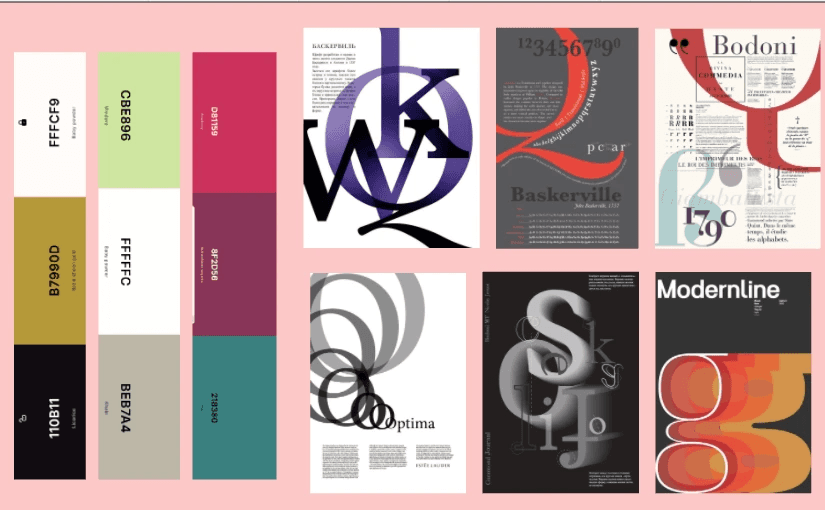
For the first step of this project we were tasked to gather inspiration from outside sources and wee places of where our fonts might be used in order to recontextualize that concept into our final posters.
Through the use of Pinterest I was able to gather some visual and color inspiration for what I might want to see from my final poster
Ideation & Sketching
From this point on we were told to start planning ahead in terms of what grids we may want to use, color palettes, and placement.
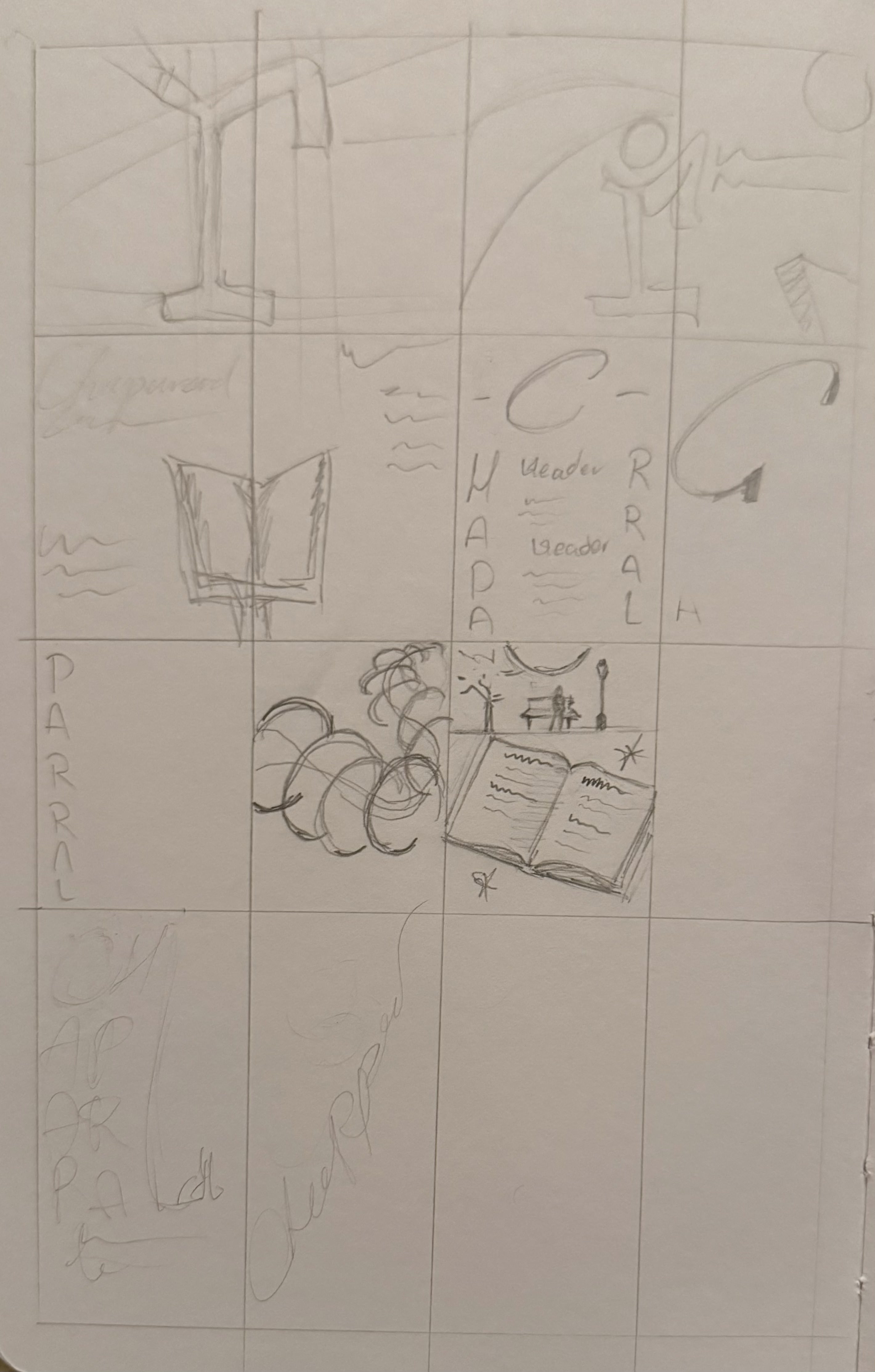
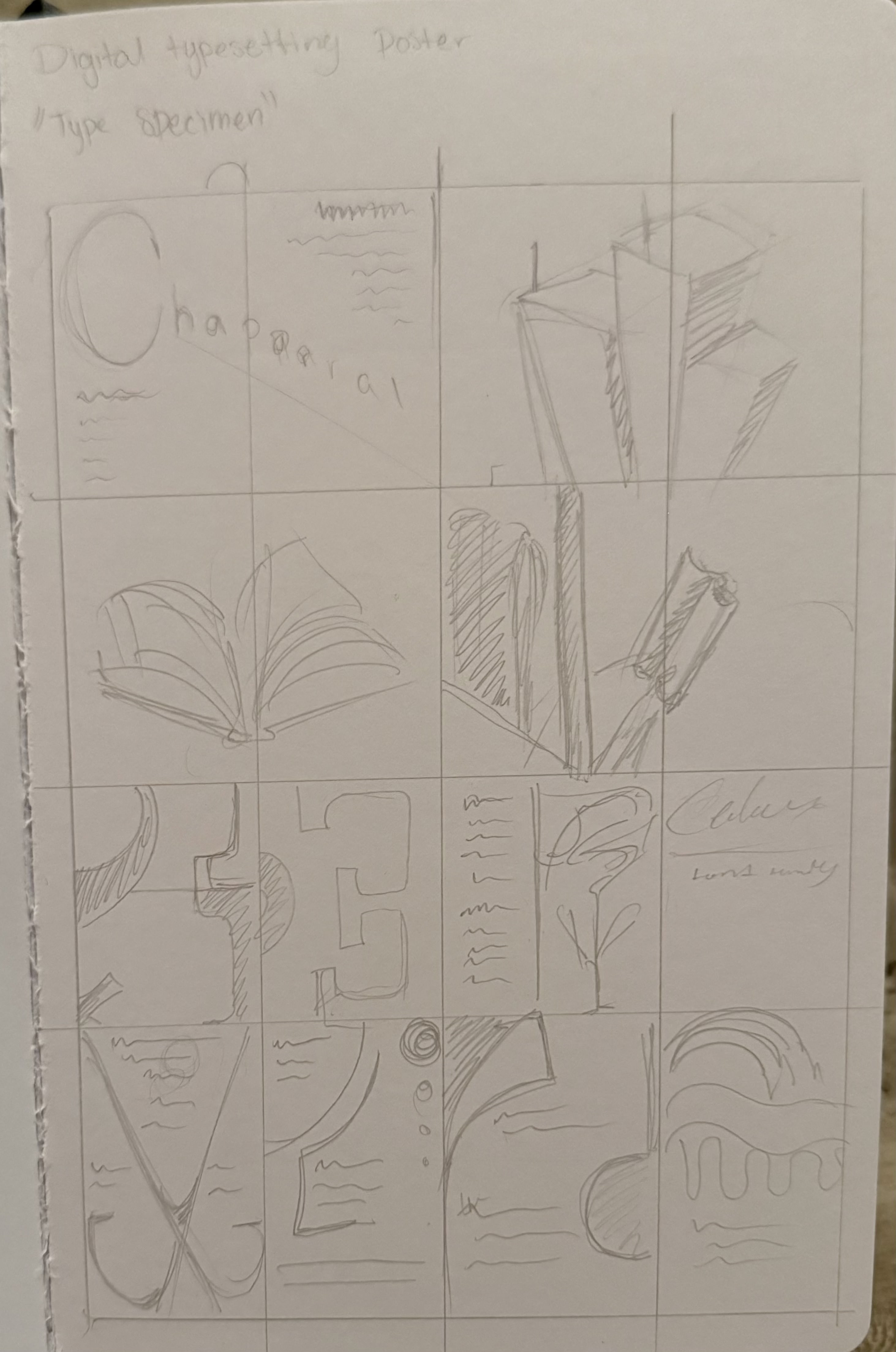
This is something I took into great consideration when thumbnail sketching as I wanted to make sure I had mapped out every single one of my ideas to make sure I could explore the ones I found most interesting.
50 Thumbnail Sketches
File Setup and Digitization
Next step in the process is setting up our files with the proper margins bleed and grids
This assignment required:
1” Margins
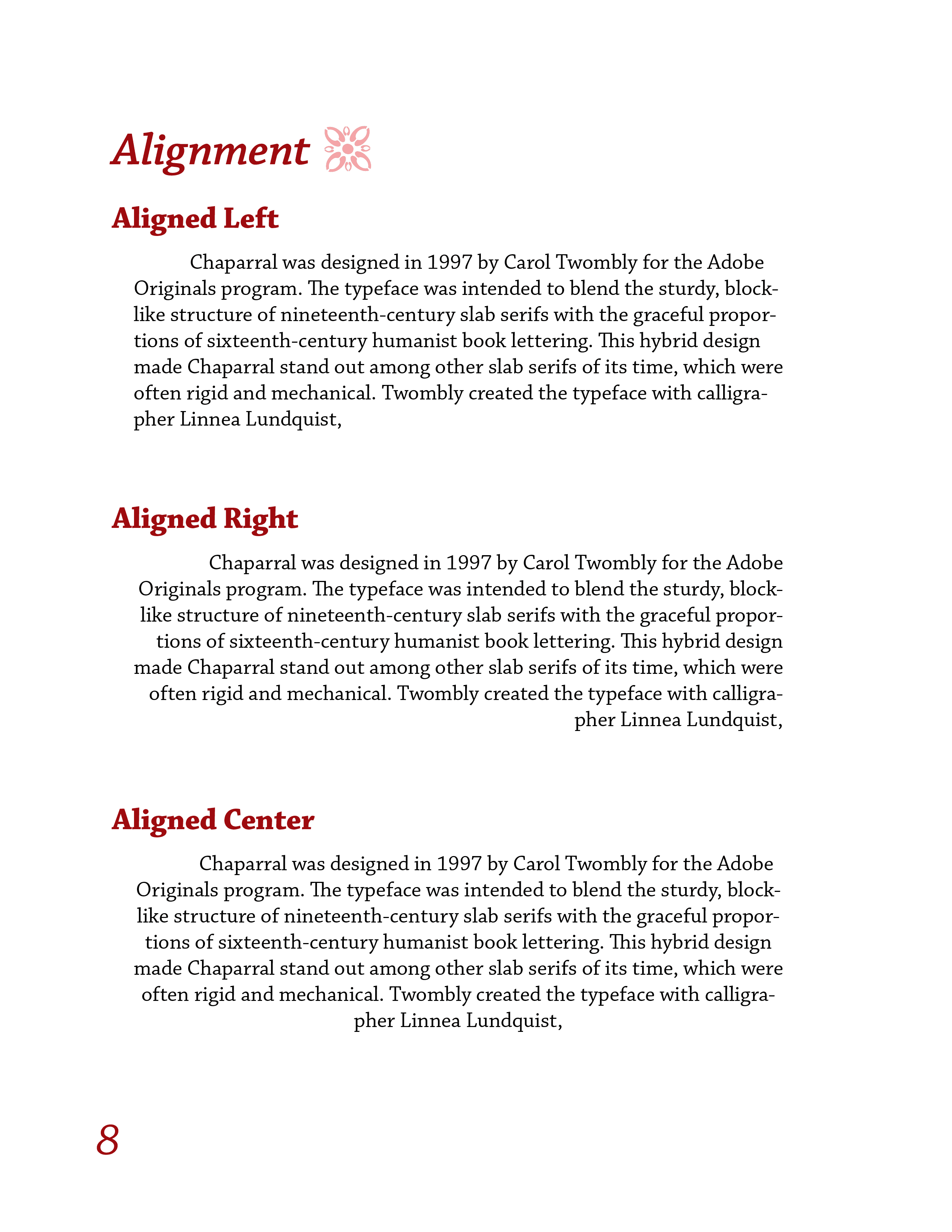
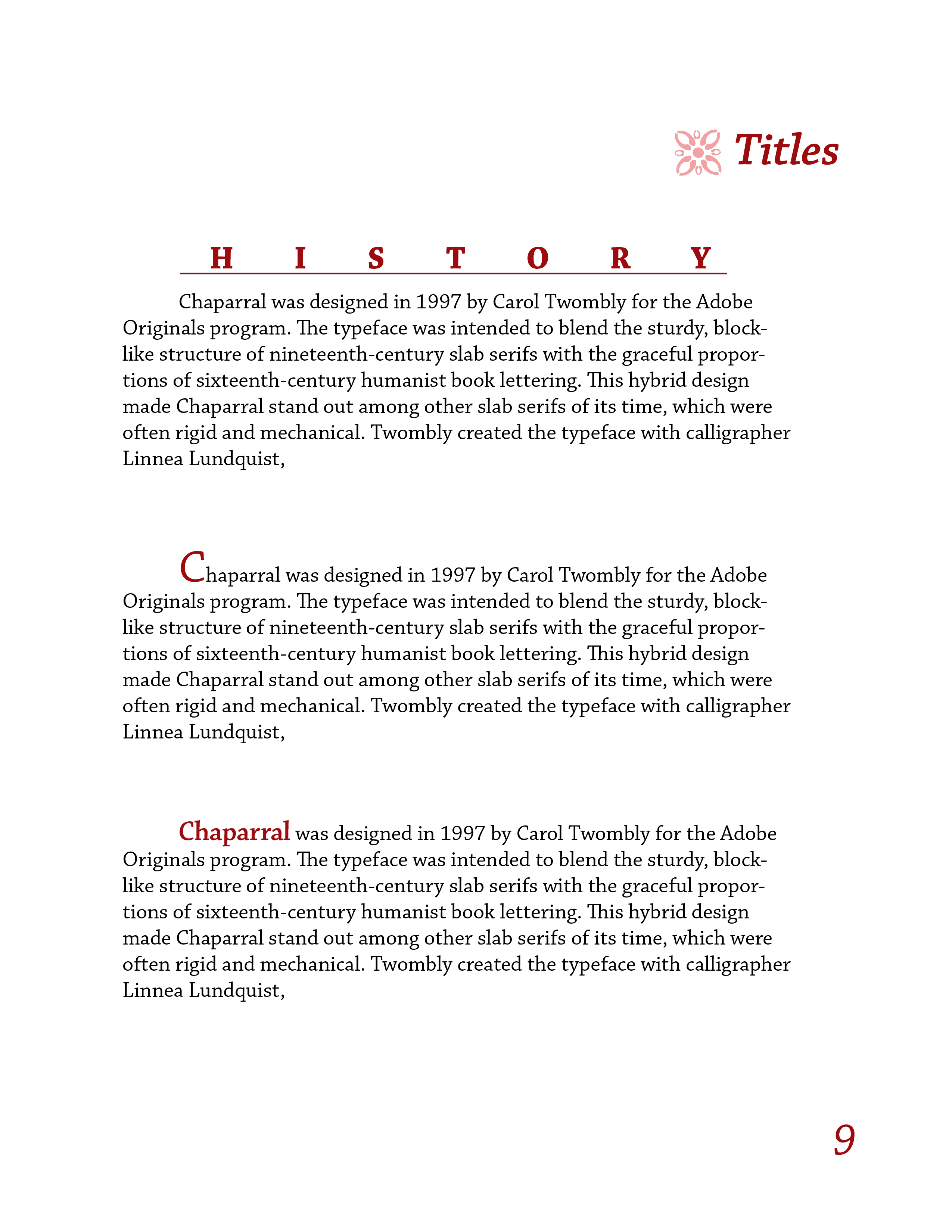
This phase focused on applying typographic structure through layout and hierarchy.
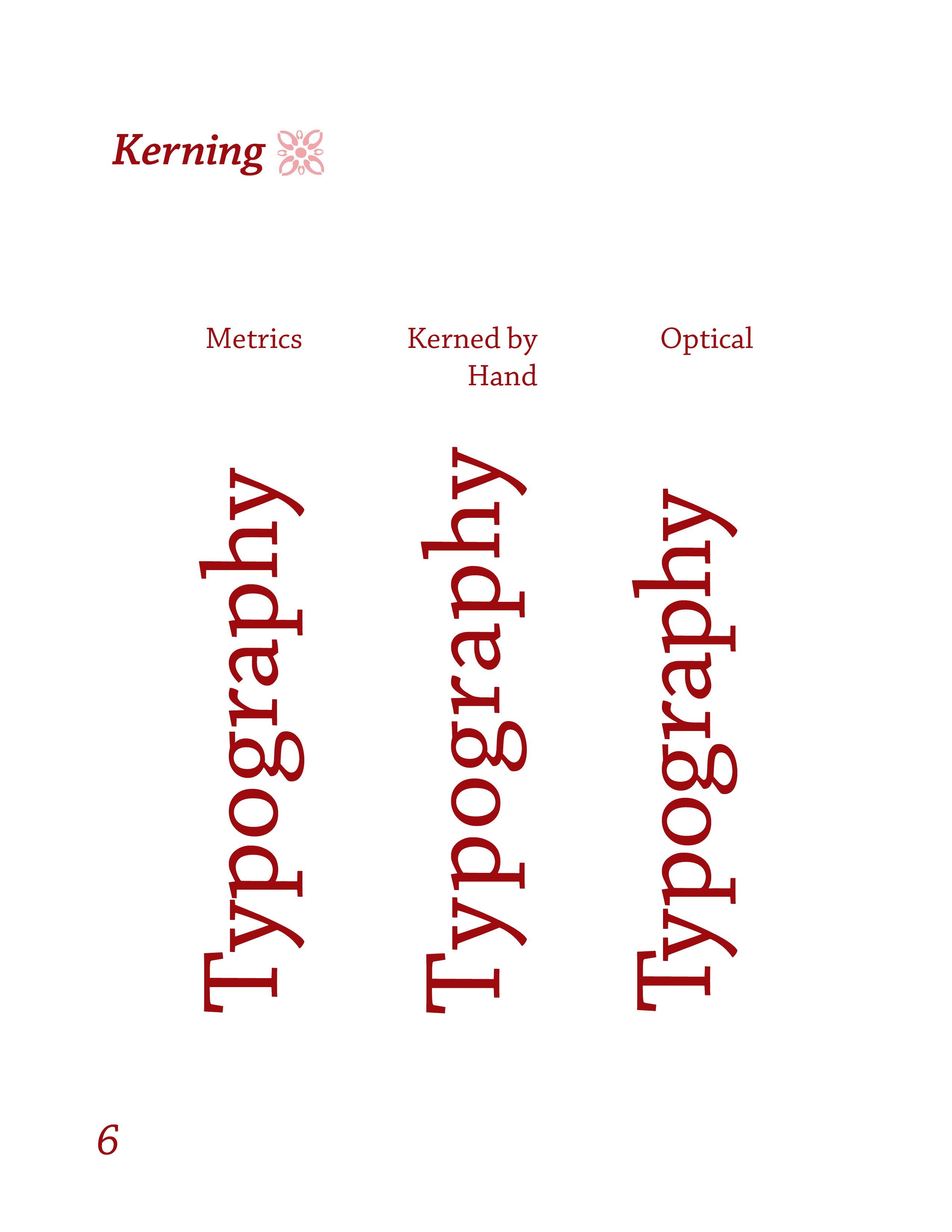
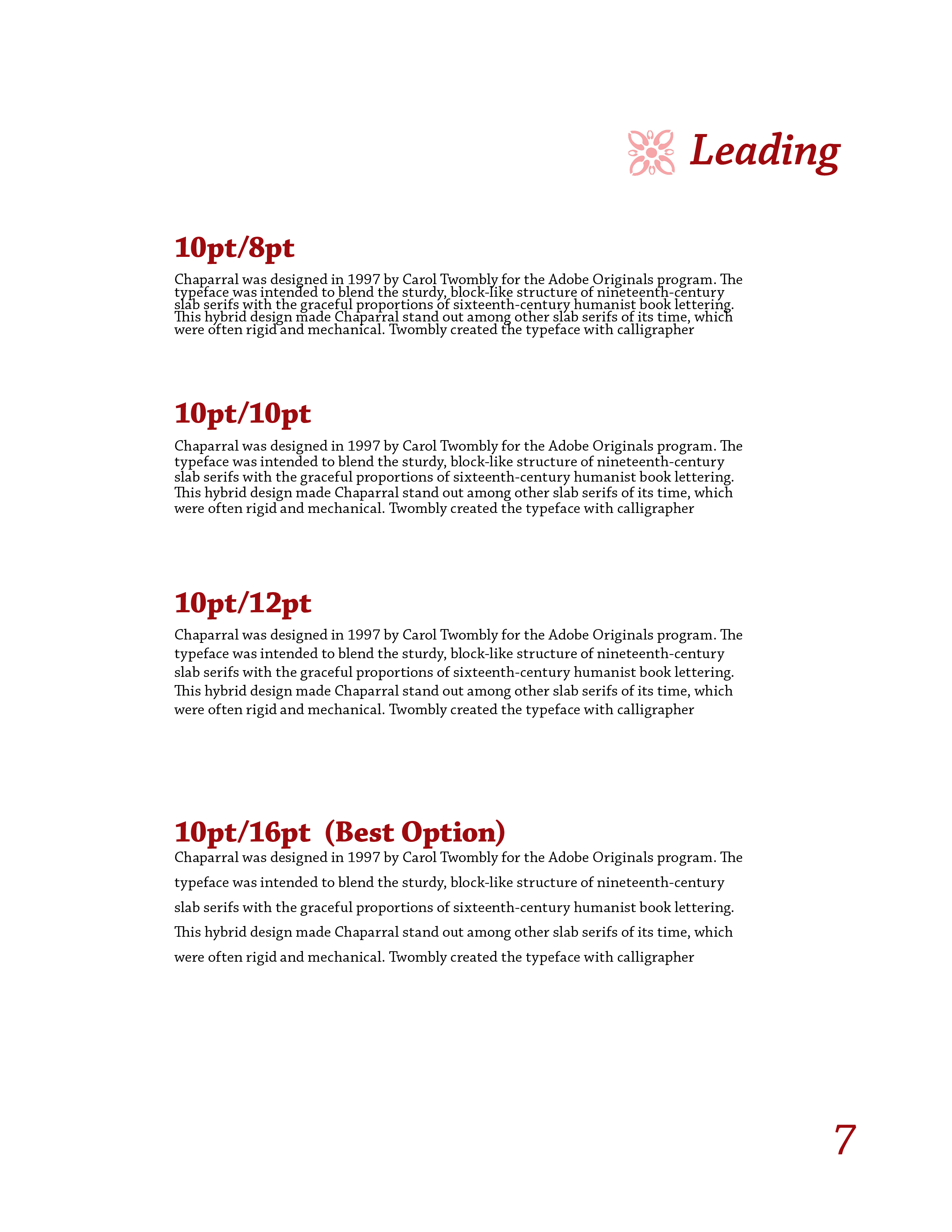
After setting up my file, we were instructed to complete a Digital Typesetting Project that focused on layout control, spacing, and readability.
Since this project builds directly into my type specimen work, I’m organizing them as a single process rather than two separate projects.
This stage taught me how much control is involved in basic typography when design elements are limited.
Reflection Notes:
This project forced me to think about spacing, alignment, and layout much more intentionally. Without relying on images or decorative graphics, the type itself had to carry the entire design.
By the time I moved into the specimen poster, I already had a stronger foundation for structure and layout decisions.
Type Specimen Poster
Using only the characters of my typeface to build graphics.
For this phase, we were instructed to design a type specimen poster using only the characters from the assigned font.
This meant:
No external illustrations
No images
No shapes not made from type
Only letters, numbers, and punctuation
This constraint made the design process significantly more challenging, but also more focused.
Chapbook
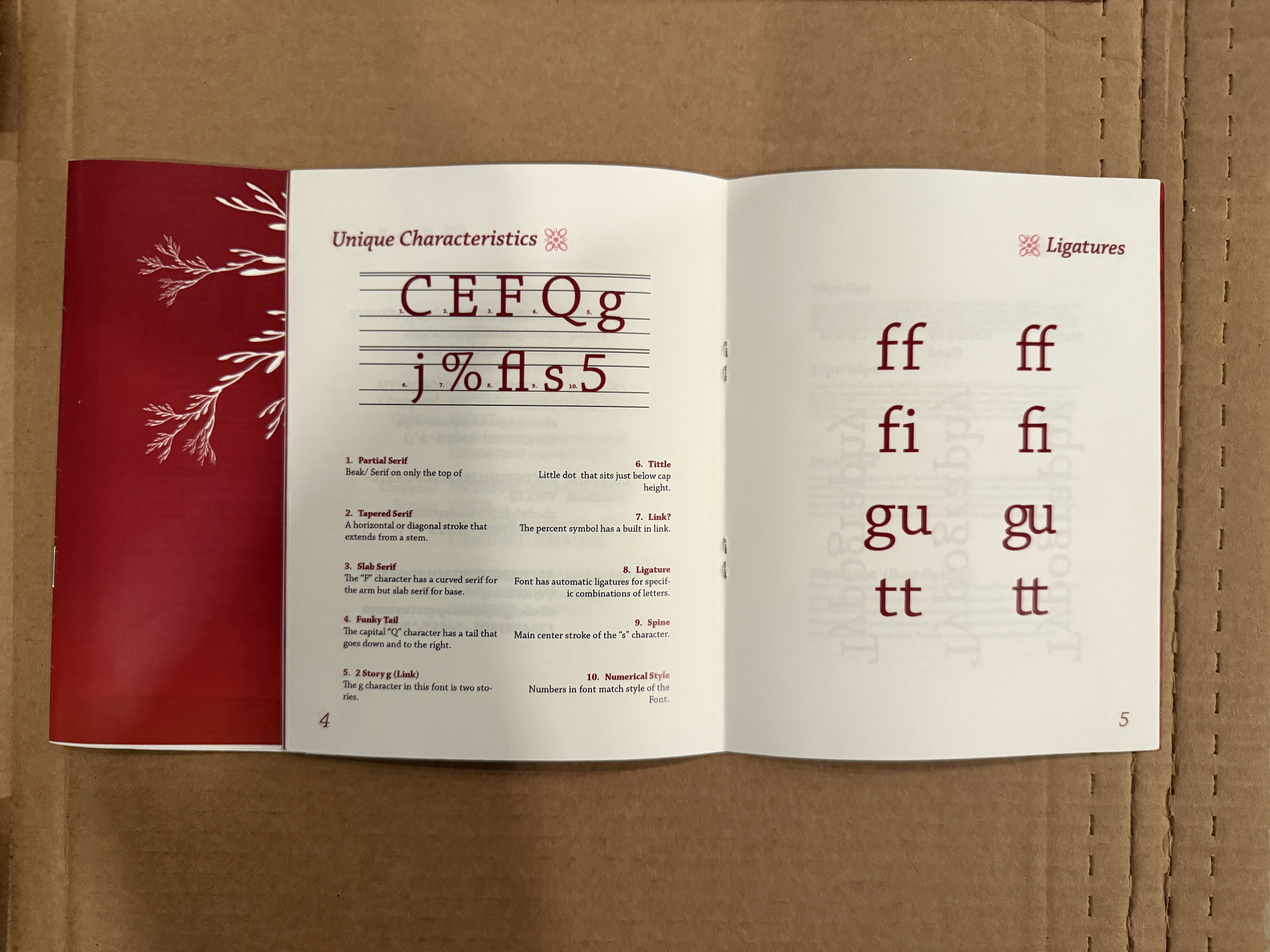
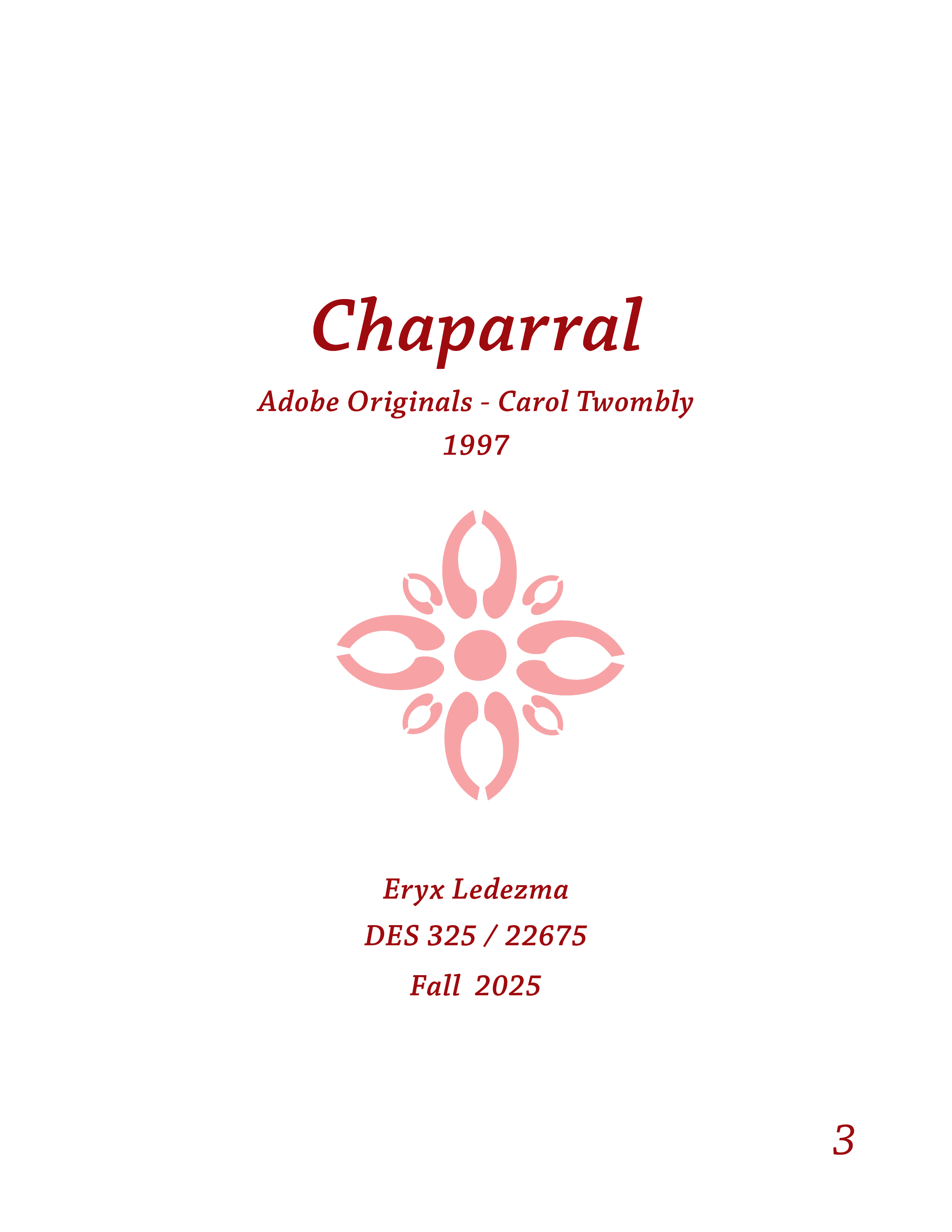
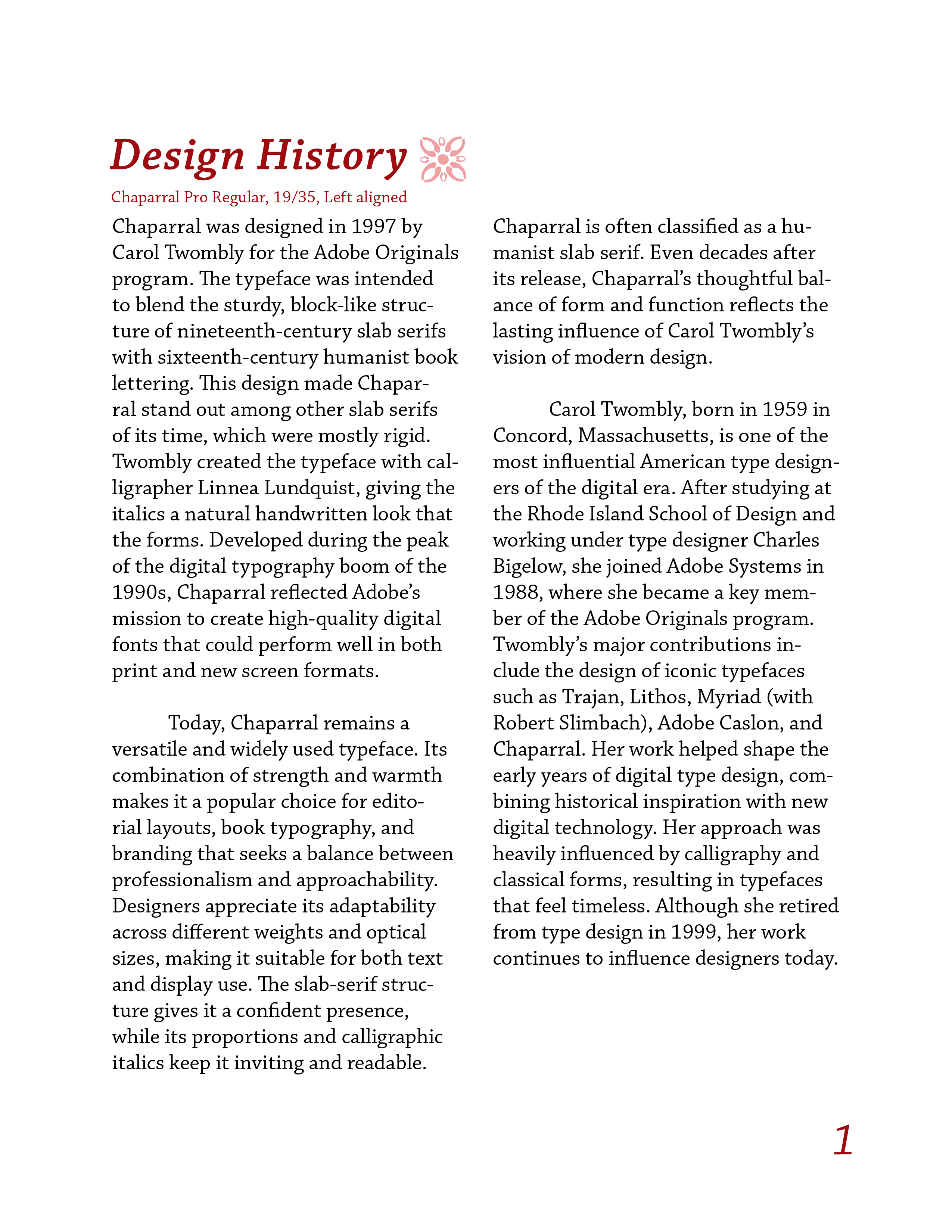
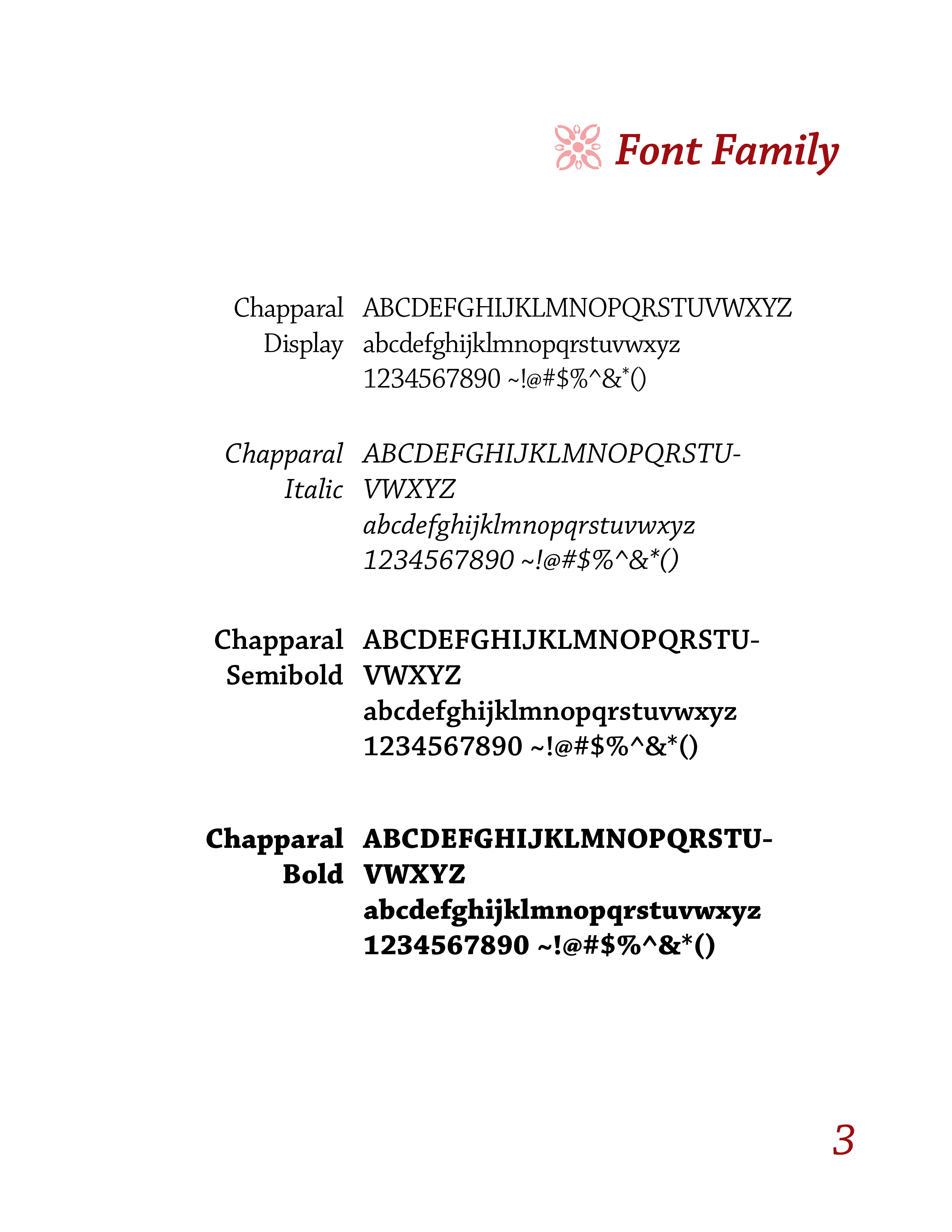
For the chapbook, since we had already done the digital typesetting assignment we could select already designed pages and use them for our chapbooks which made this step very simple
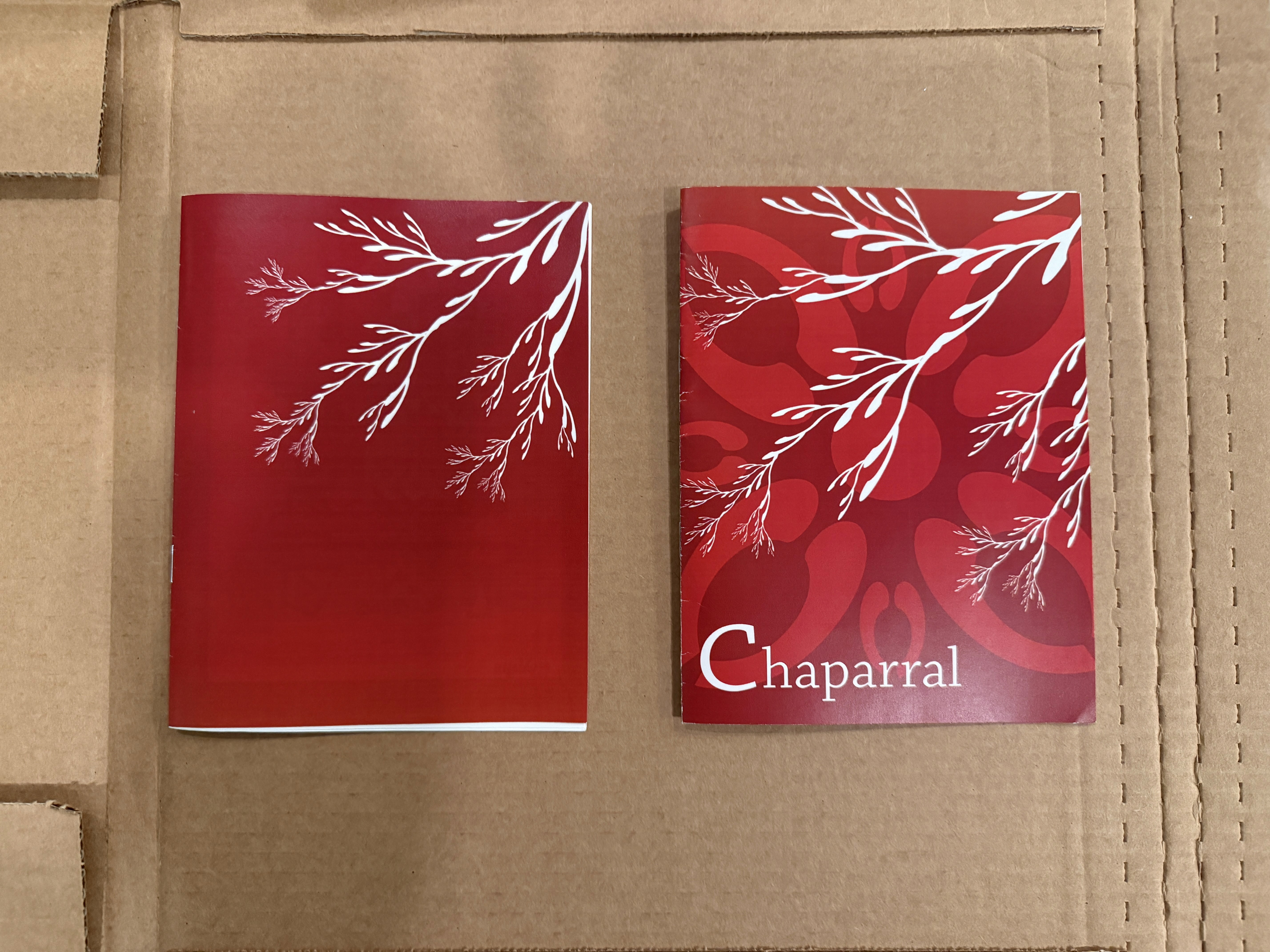
Printing & Critique
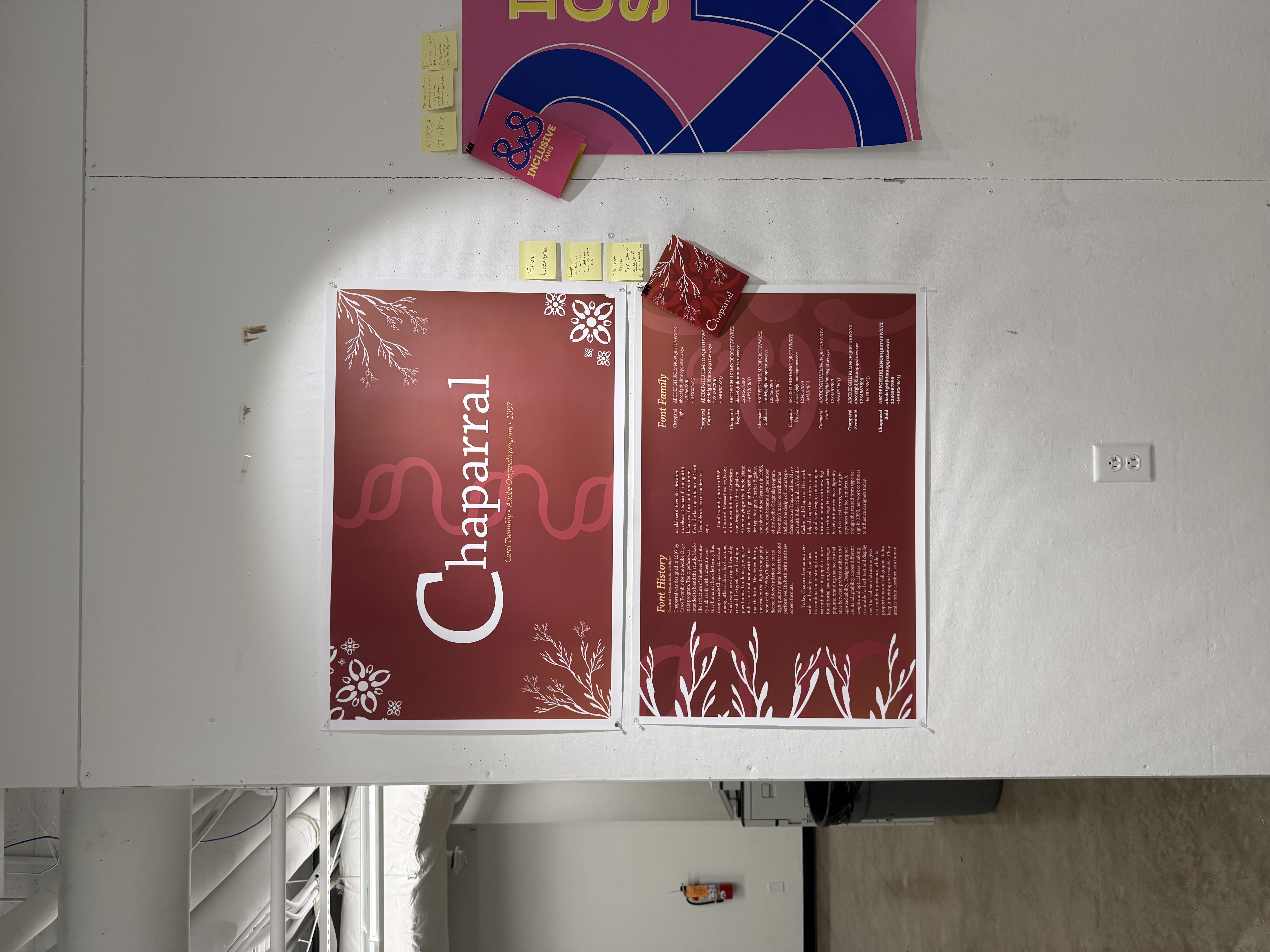
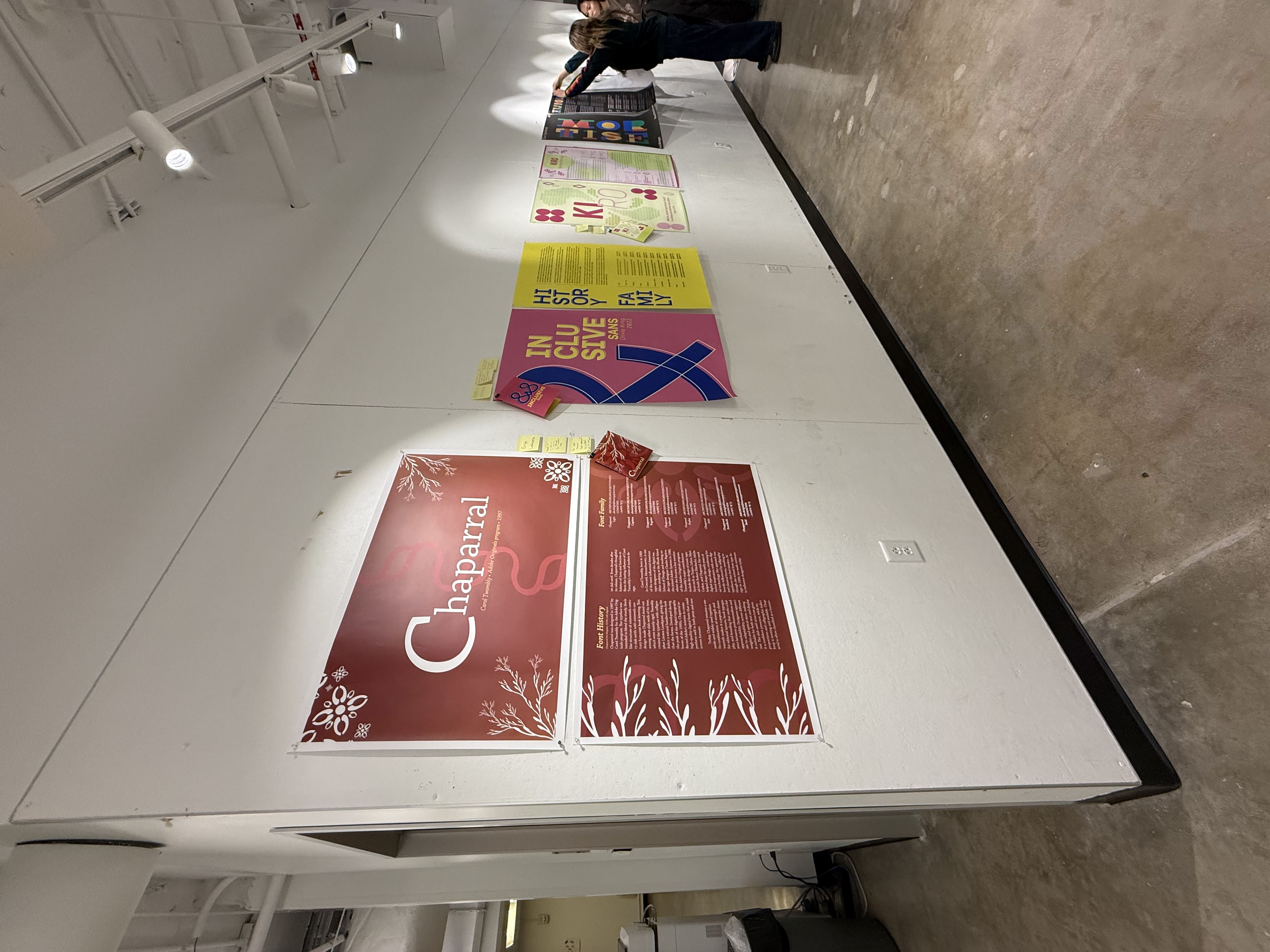
Once the posters were complete, we printed them on the Ricoh printer and hung them up for critique.
Seeing the work printed changed my perspective on the design.
Printing revealed things that weren’t obvious on screen color balance, scale, and spacing mattered more than expected.
Getting feedback in a physical space also changed how I interpreted critique. It was easier to compare work, notice readability issues, and see how composition held up from a distance.
The critique helped inform what I would improve if I were to revisit the project.






Digital Type Specimen