The Goal :
Create a semester long project that utilizes new skills, materials, and software in order to gain new skills
click and hold to zoom!
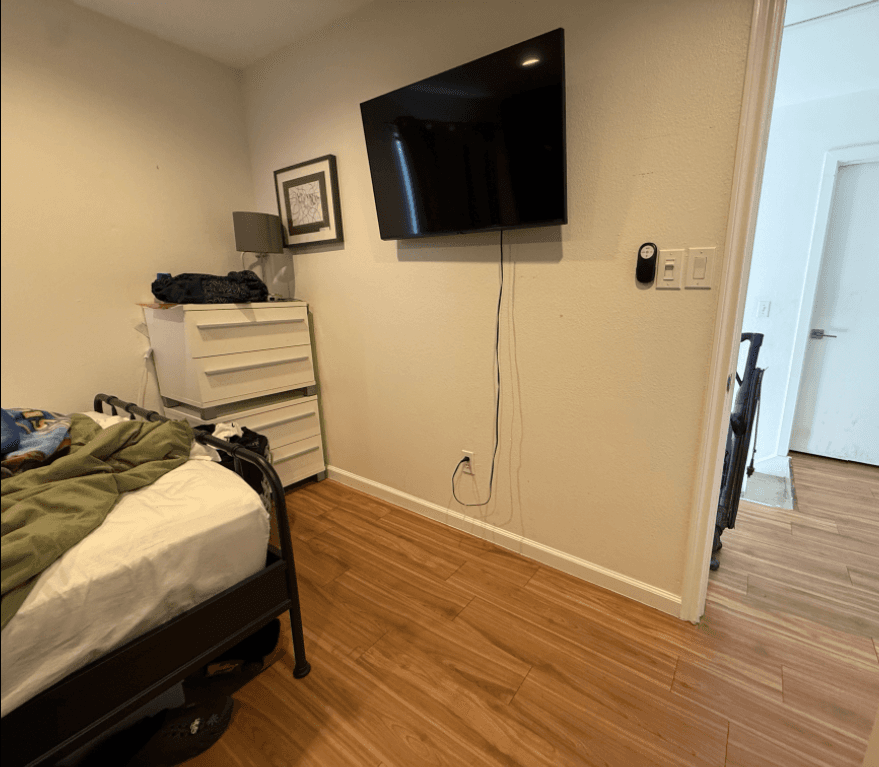
The Space / Client
After conducting various interviews of people in the house I decided to focus my project on one individual, a 20 year old male. From there I conducted and interview to gather vital information for the project
Finds current setup uncomfortable and inefficient
limited floor space
Needs a place for:
Record player
Entertainment system
What this space presents:
Focused design for one person Clear problem with a specific function More manageable scope Opportunity for custom furniture design (record stand / entertainment unit).
Sketching
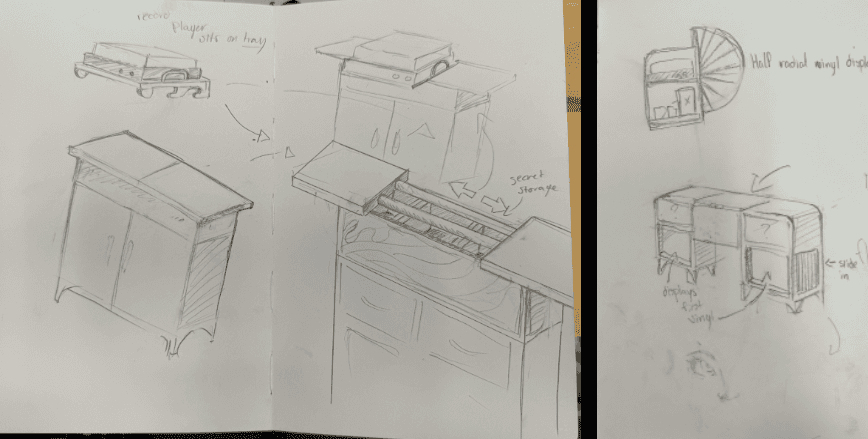
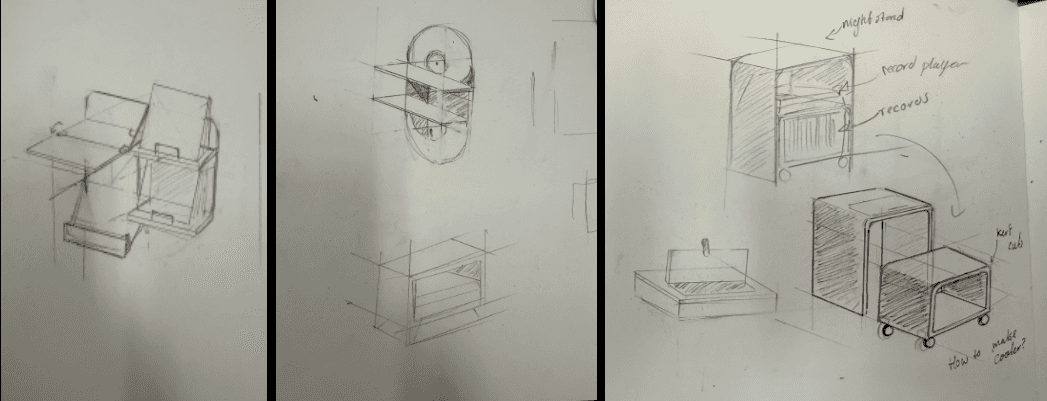
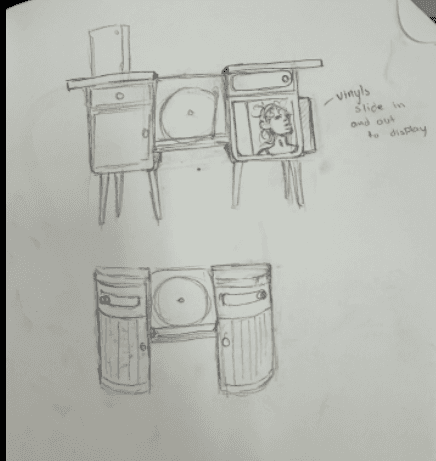
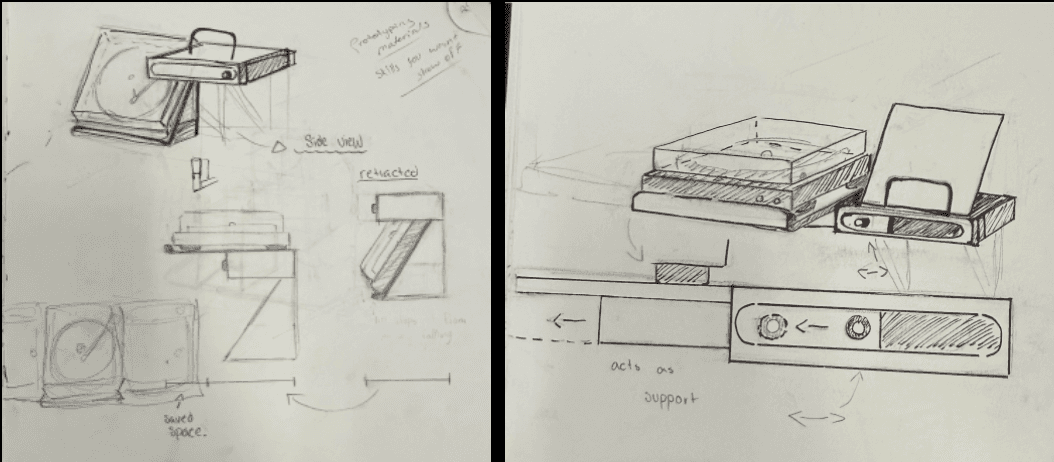
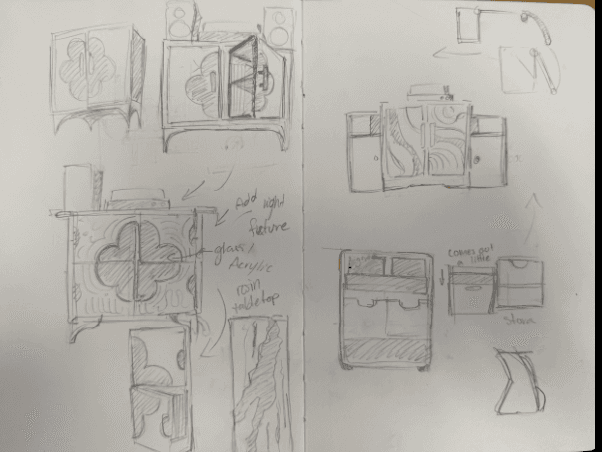
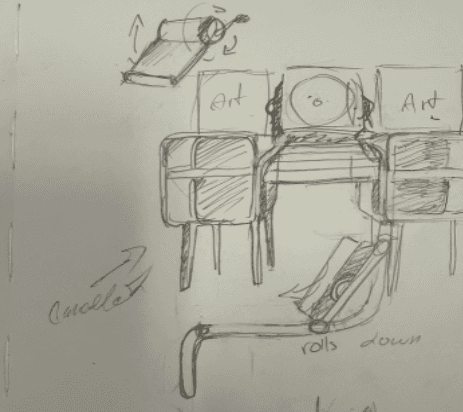
After conducting various interviews of people in the house I decided to focus my project on one individual, a 20 year old male. From there I conducted and interview to gather vital information for the project
The User:
Finds current setup uncomfortable and inefficient
Has limited floor space
Needs a place for:
Record player
Entertainment system
What this space presents:
Focused design for one person Clear problem with a specific function More manageable scope Opportunity for custom furniture design (record stand / entertainment unit).
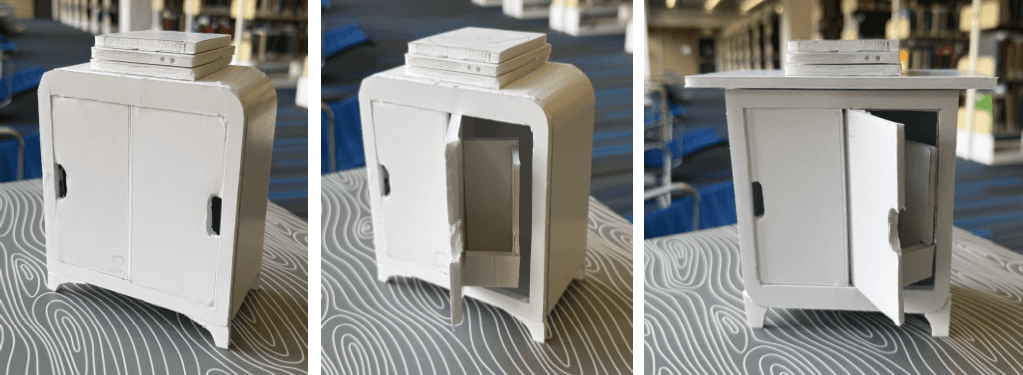
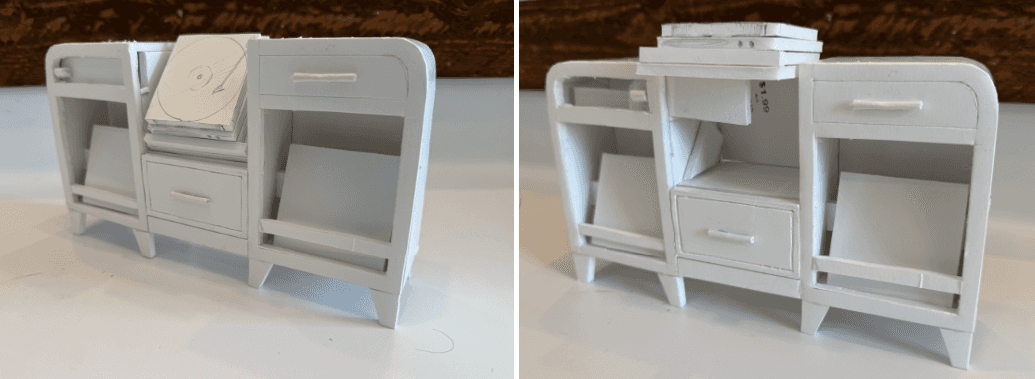
Prototyping
Translating sketches into physical form through hands-on model making and iteration
3d Modeling
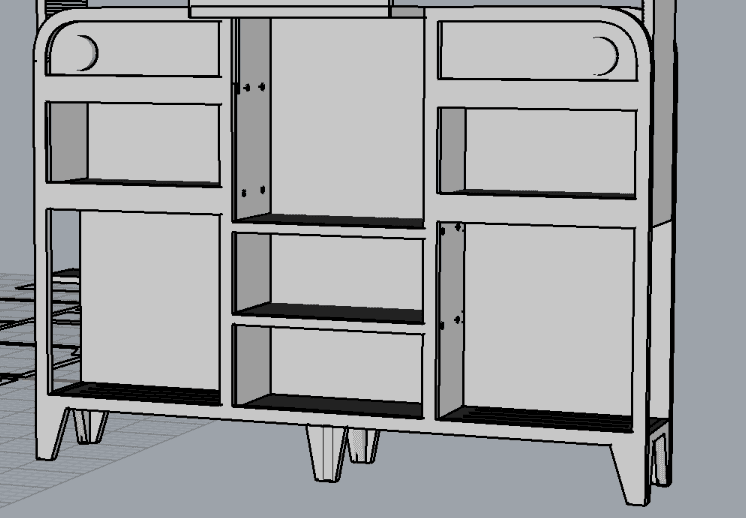
Translating feedback from low fidelity prototypes into a fabrication ready 3D model
Feedback included:
Interest in storage placement
Preference of function and usability
scale and proportion
visual appeal.
At this point, I started accounting for:
Material thickness
Hardware placement
Structural integrity
Joinery logic
This model was designed with CNC fabrication in minds, meaning every dimension and part had to be intentional and realistic for cutting and assembly.
click and hold to zoom!
The Final Prototype
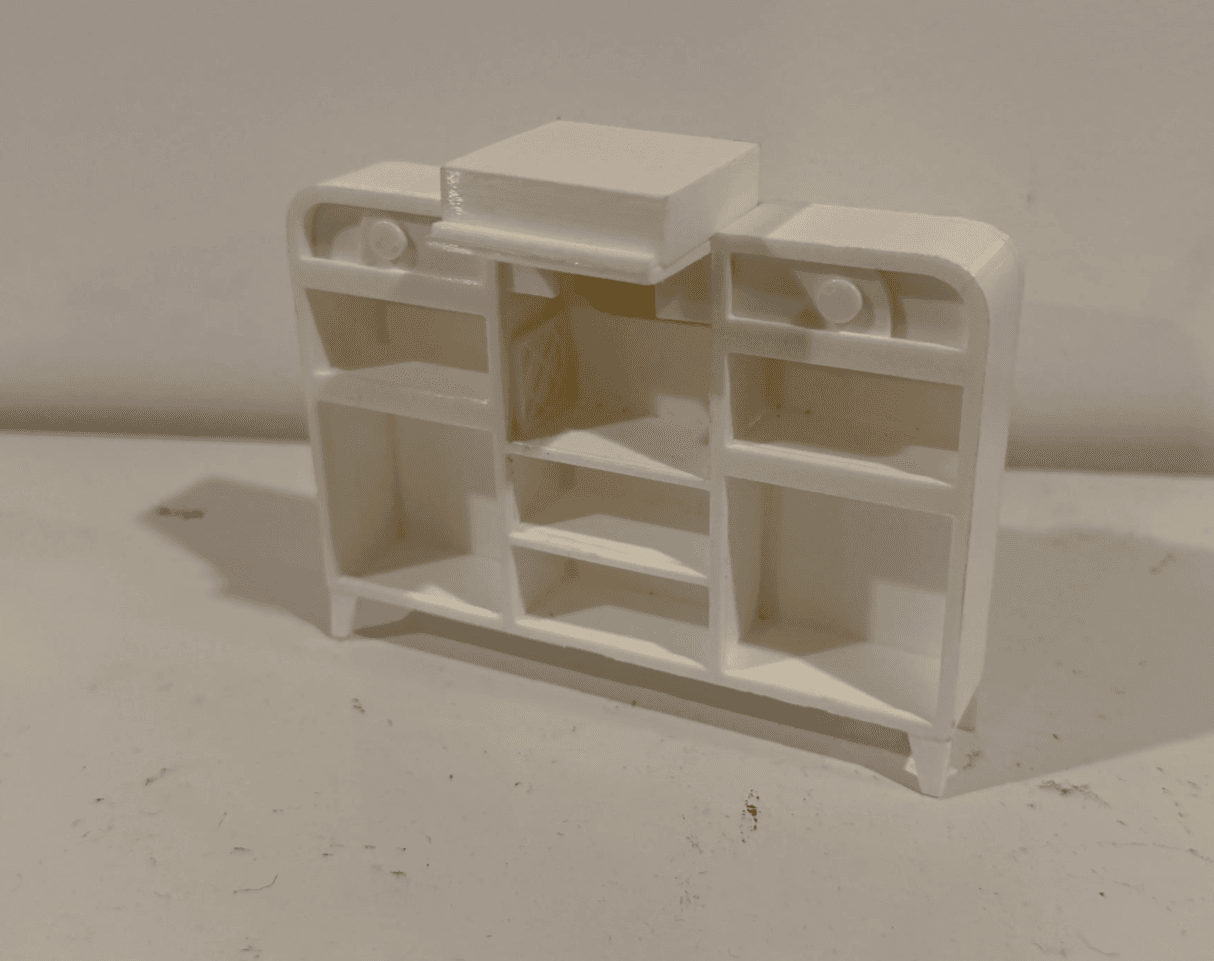
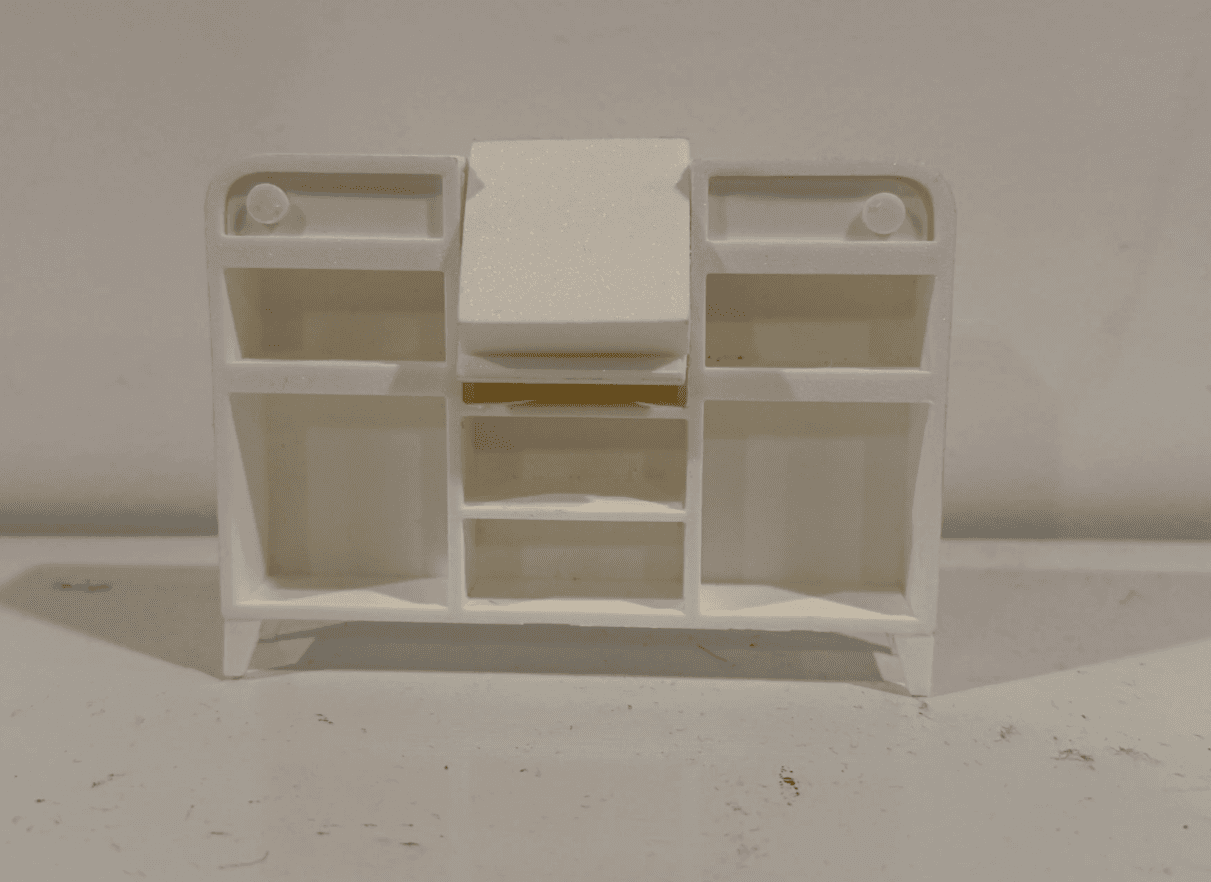
From there I 3D printed the final prototype at 1/10 scale.
This was very important because I 3D printed it in pieces and had to assemble on a small scale.
This allowed me to see any issues in advance and also ensure that it visually looked like what I planned.
CNC Preparations
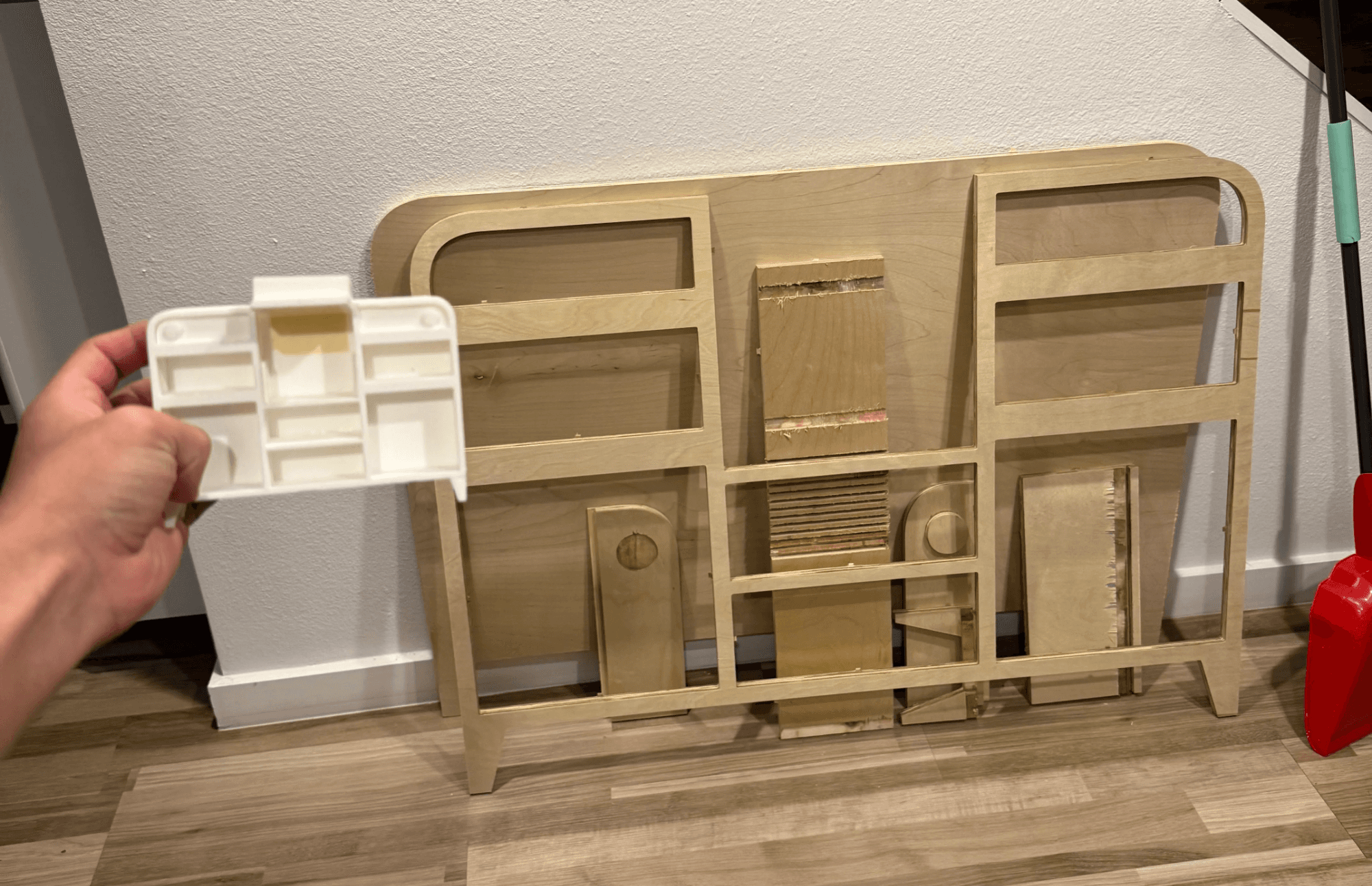
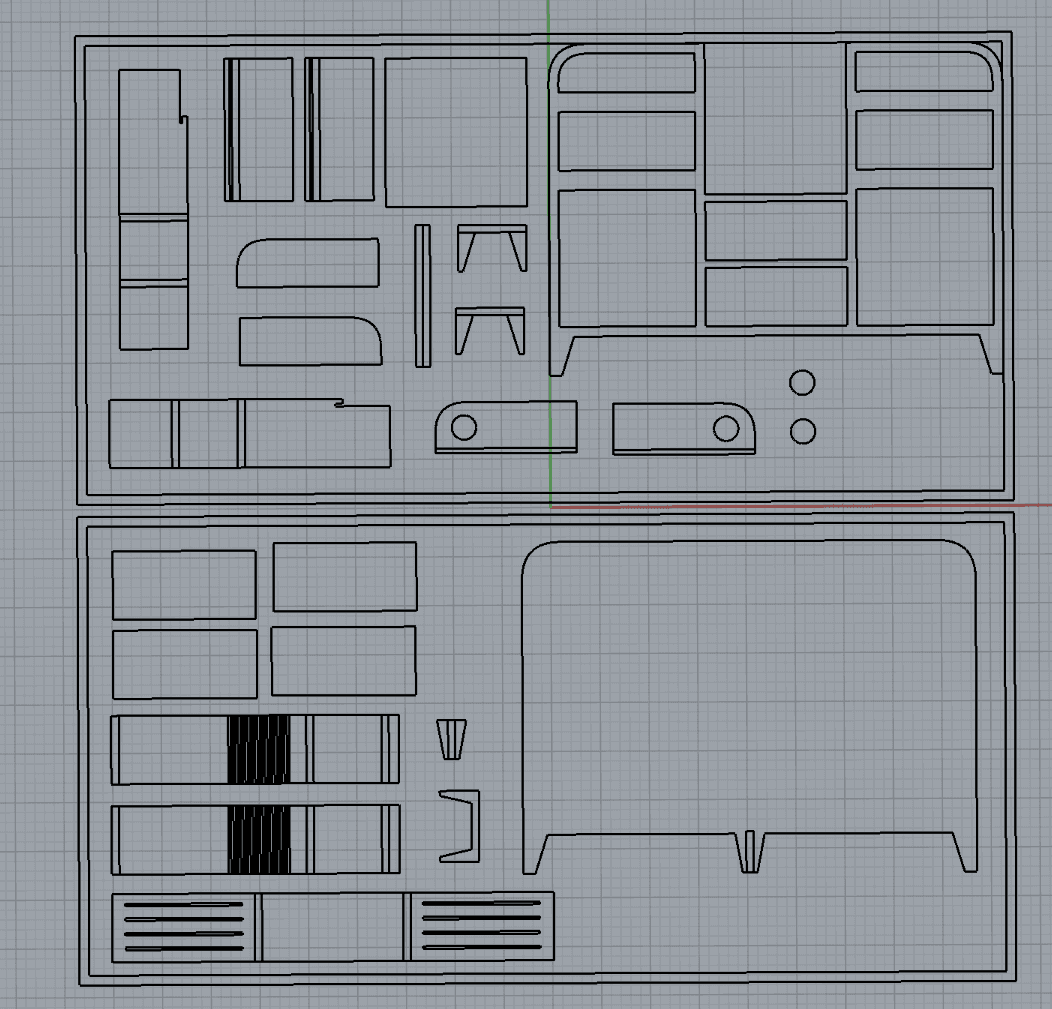
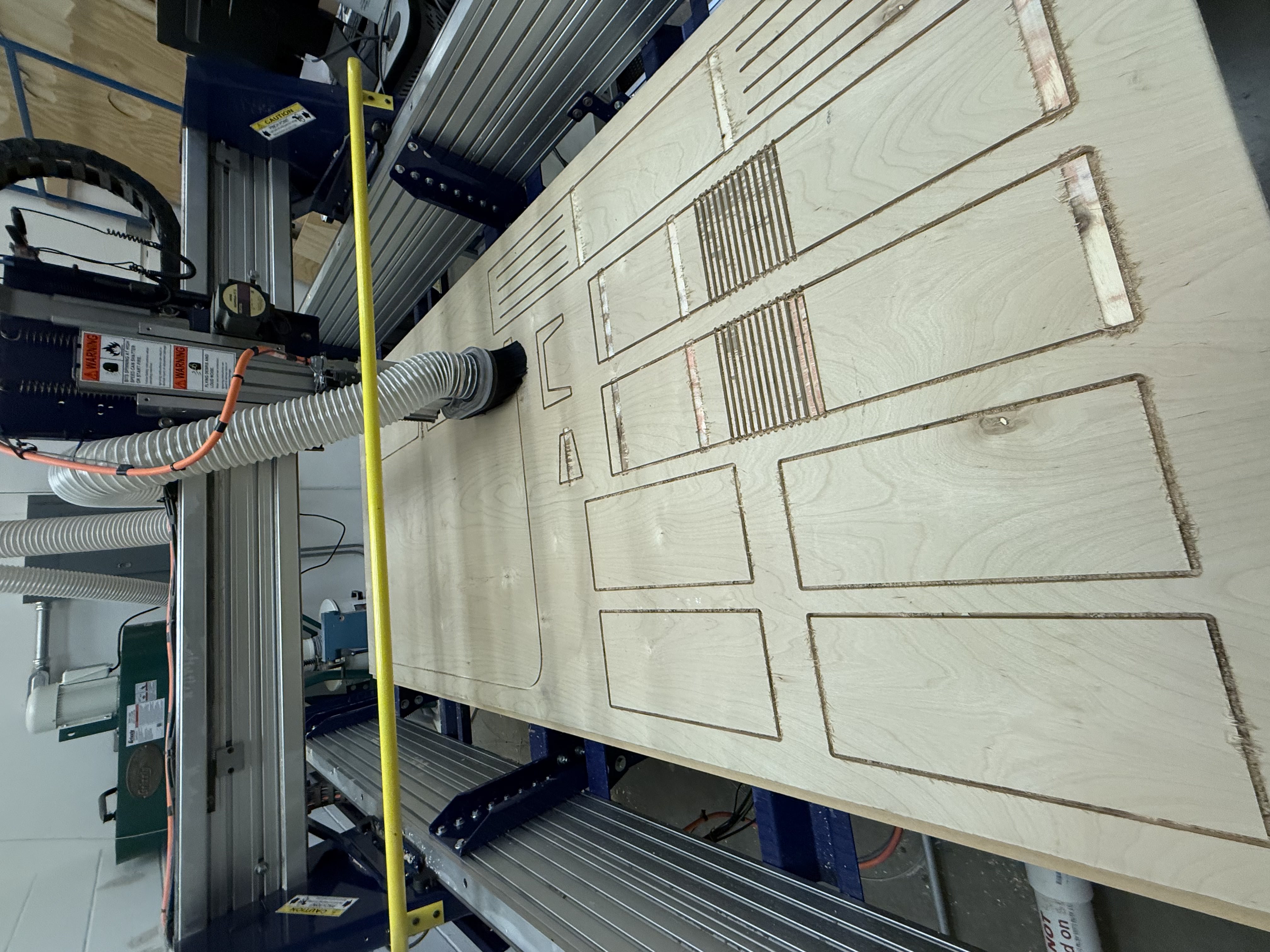
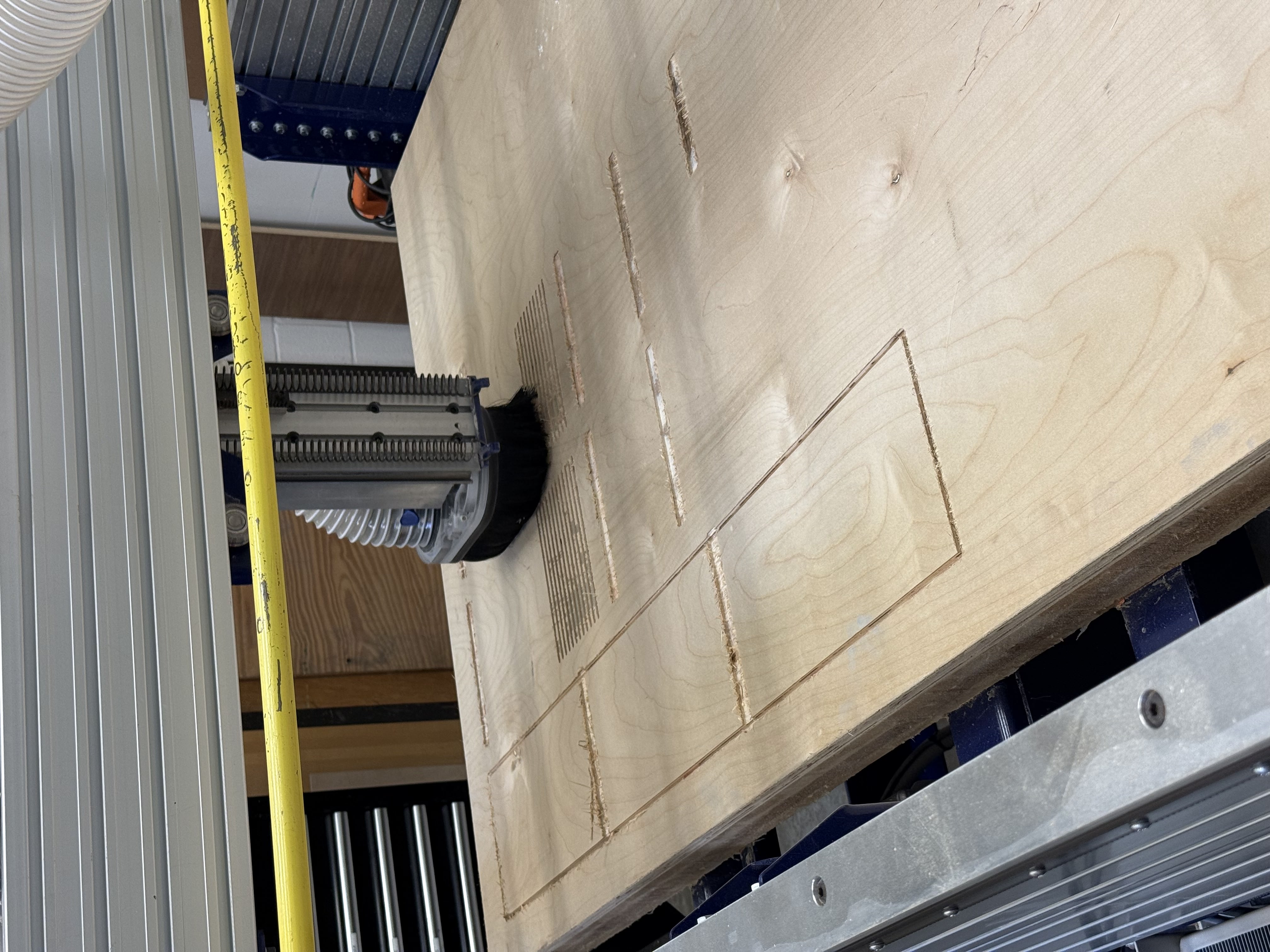
After finalizing my Rhino model, I extracted all required curves and brought them into VCarve to prepare the toolpaths.
This process involved learning:
How to properly scale files
How to organize parts on the material
How to assign cut types and depths
How the ShopBot interprets vector lines
Assembly
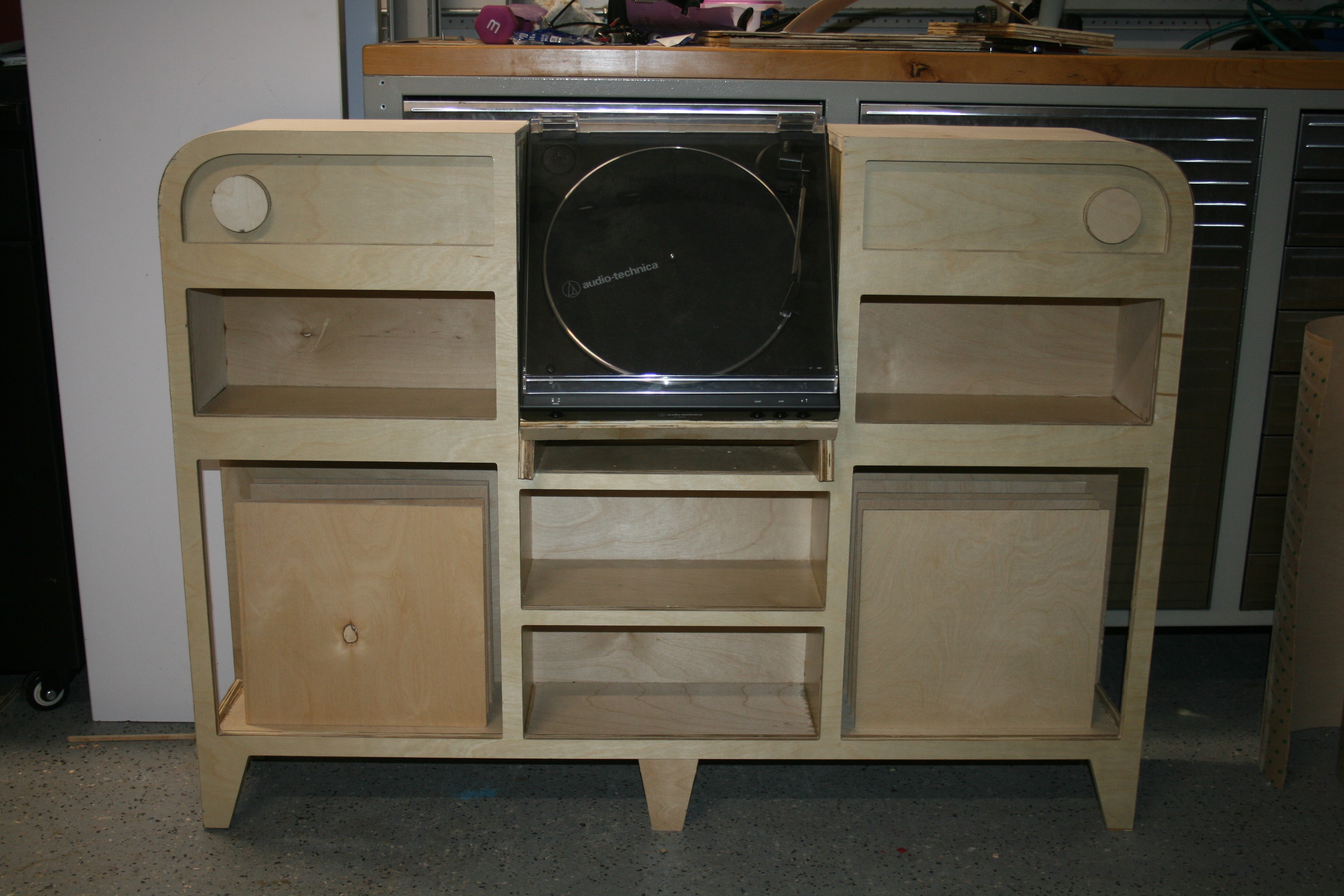
I assembled the entire piece over Thanksgiving break because I didn’t have access to the woodshop, every problem had to be solved at home with limited tools and materials.
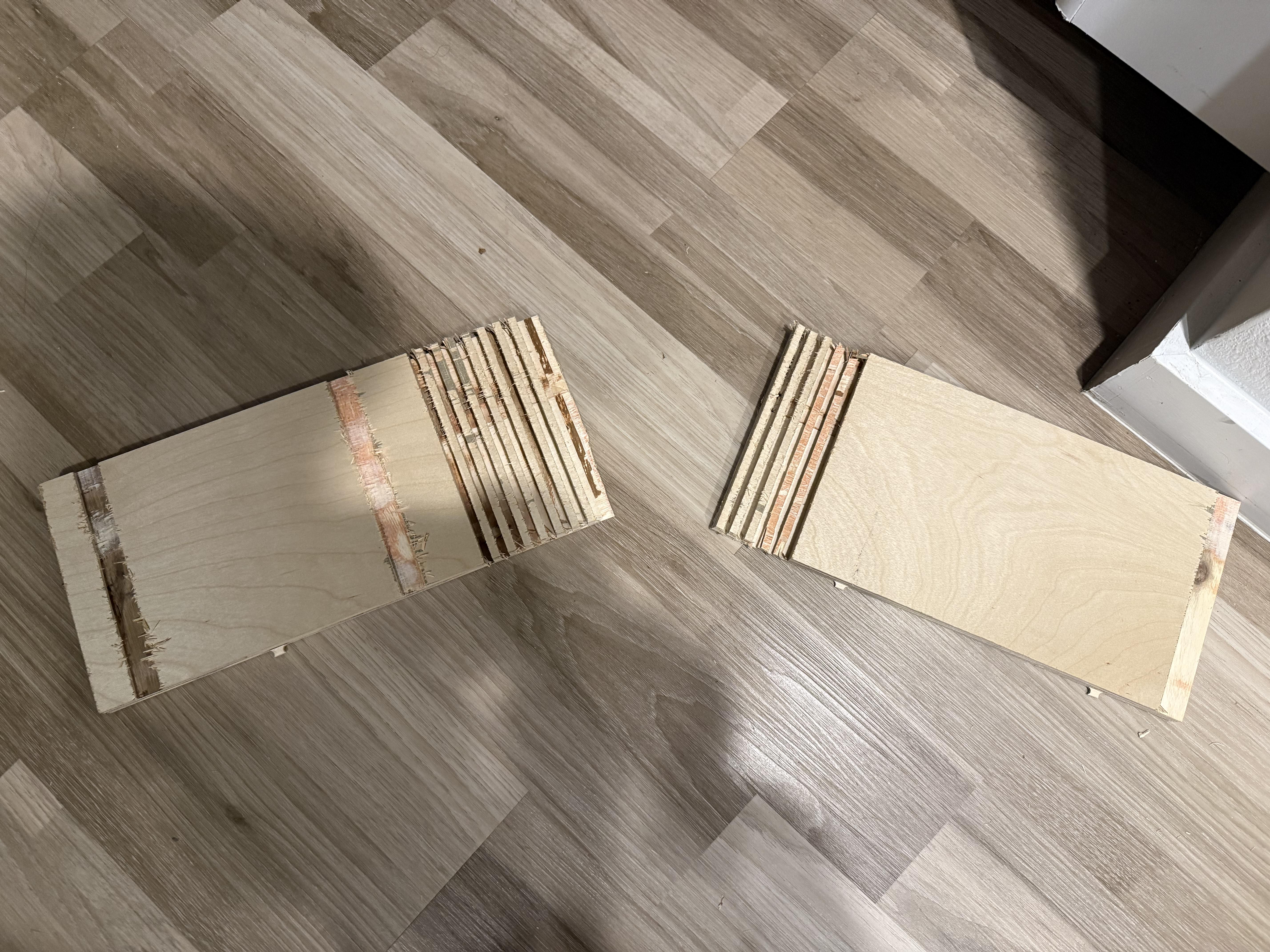
Pieces broke. Measurements were slightly off. Certain parts didn’t behave as expected once glued.
This stage was entirely driven by:
Problem solving
On-the-spot adjustments
Structural improvisation
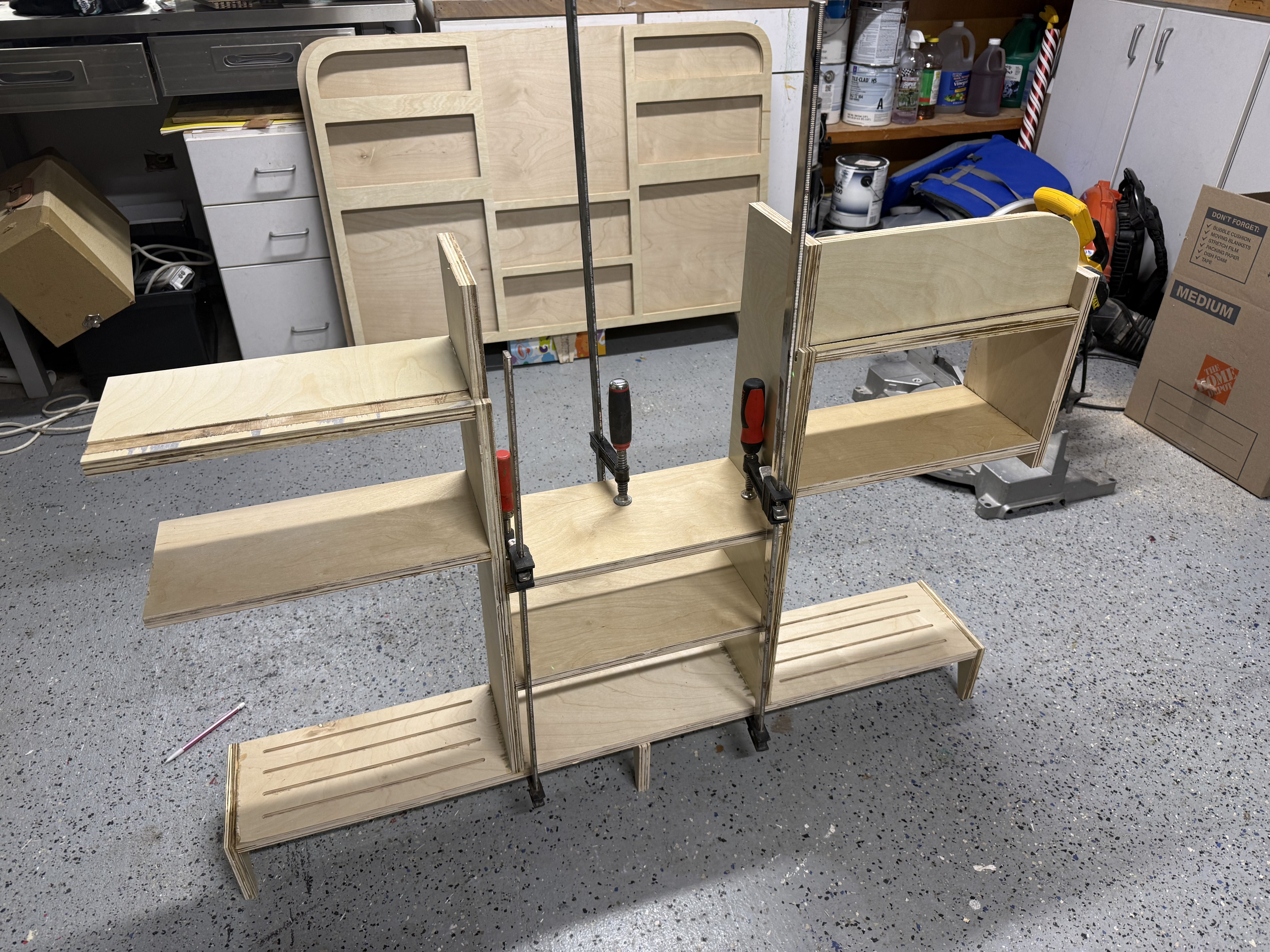
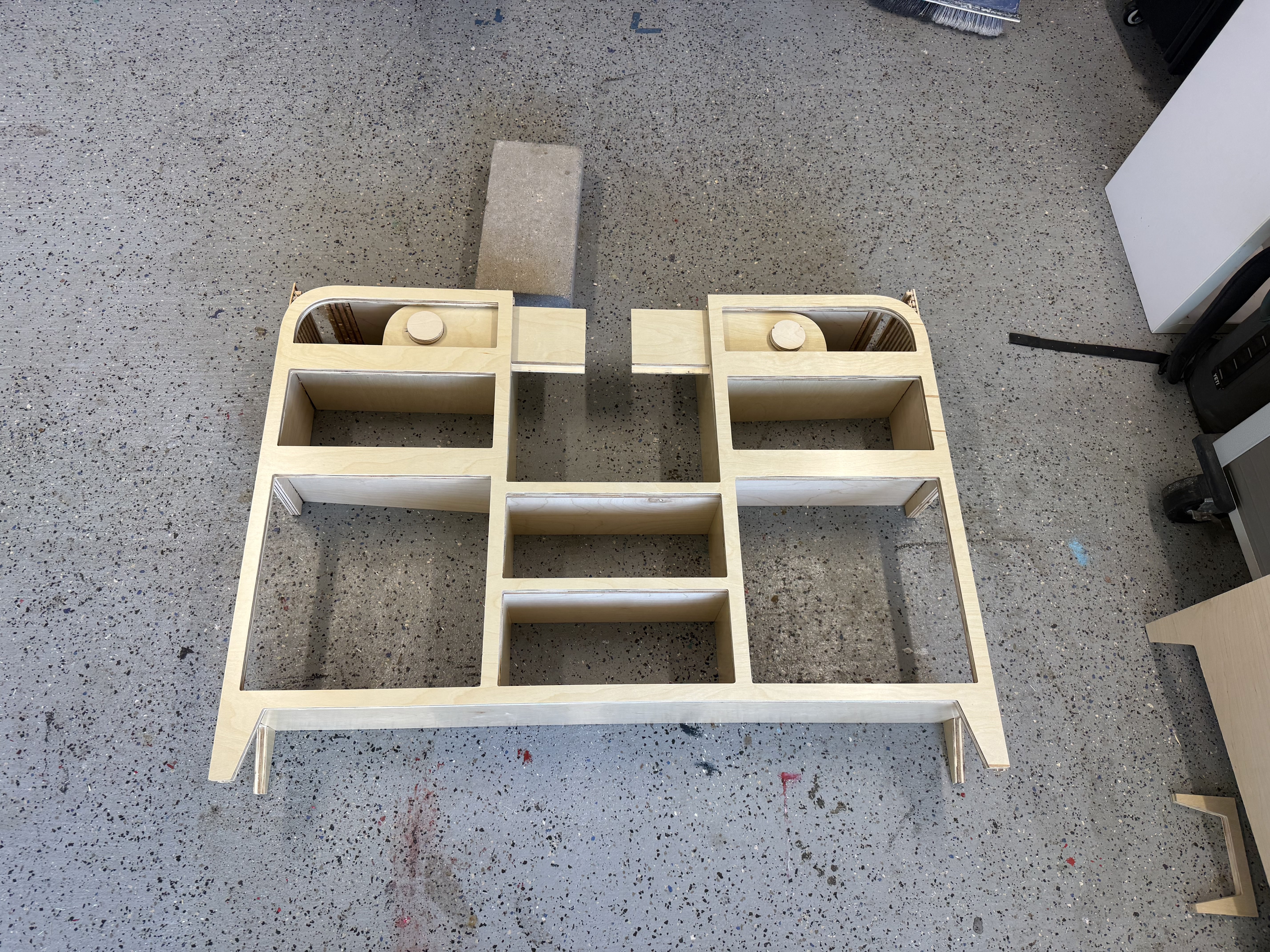
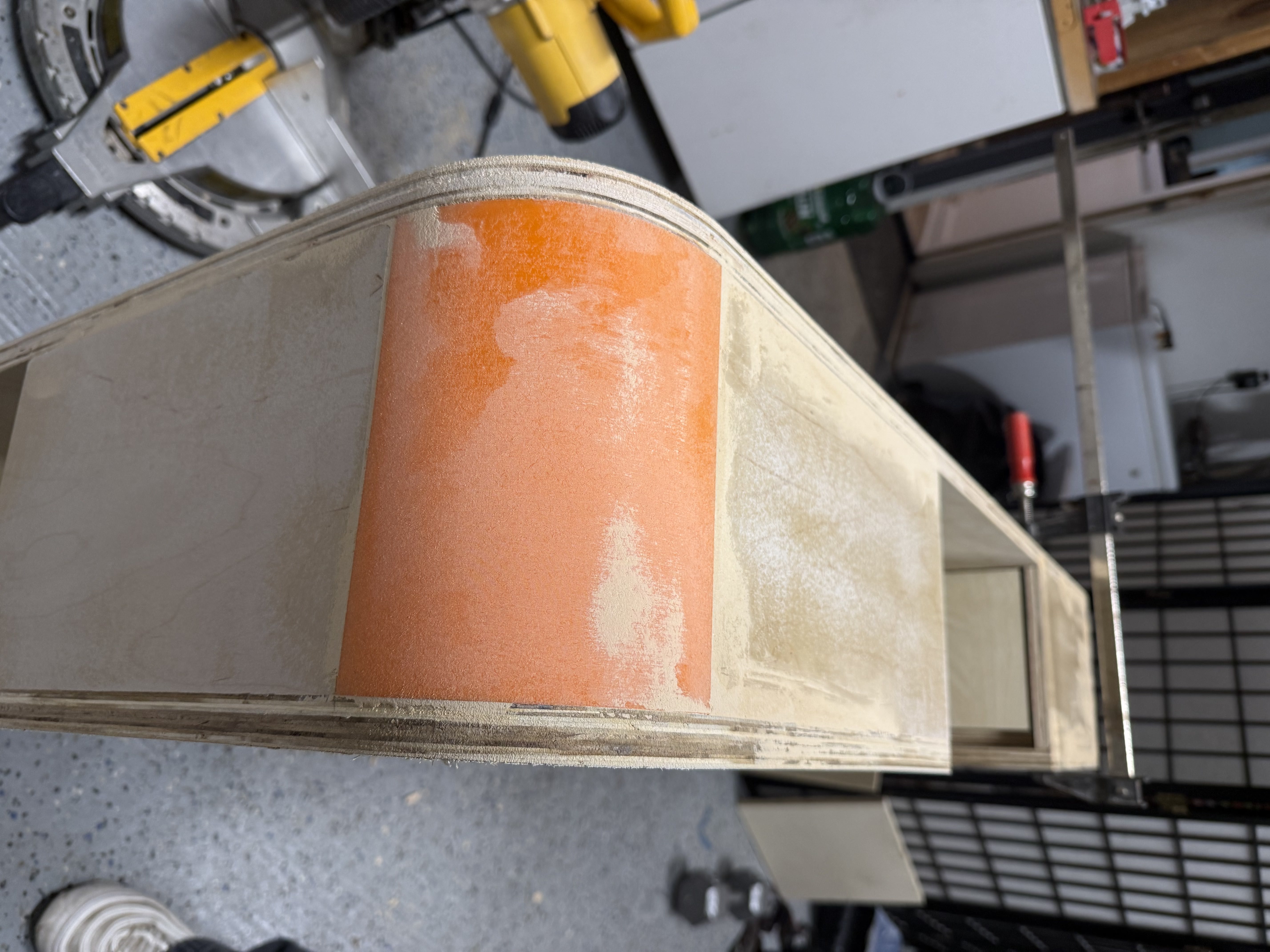
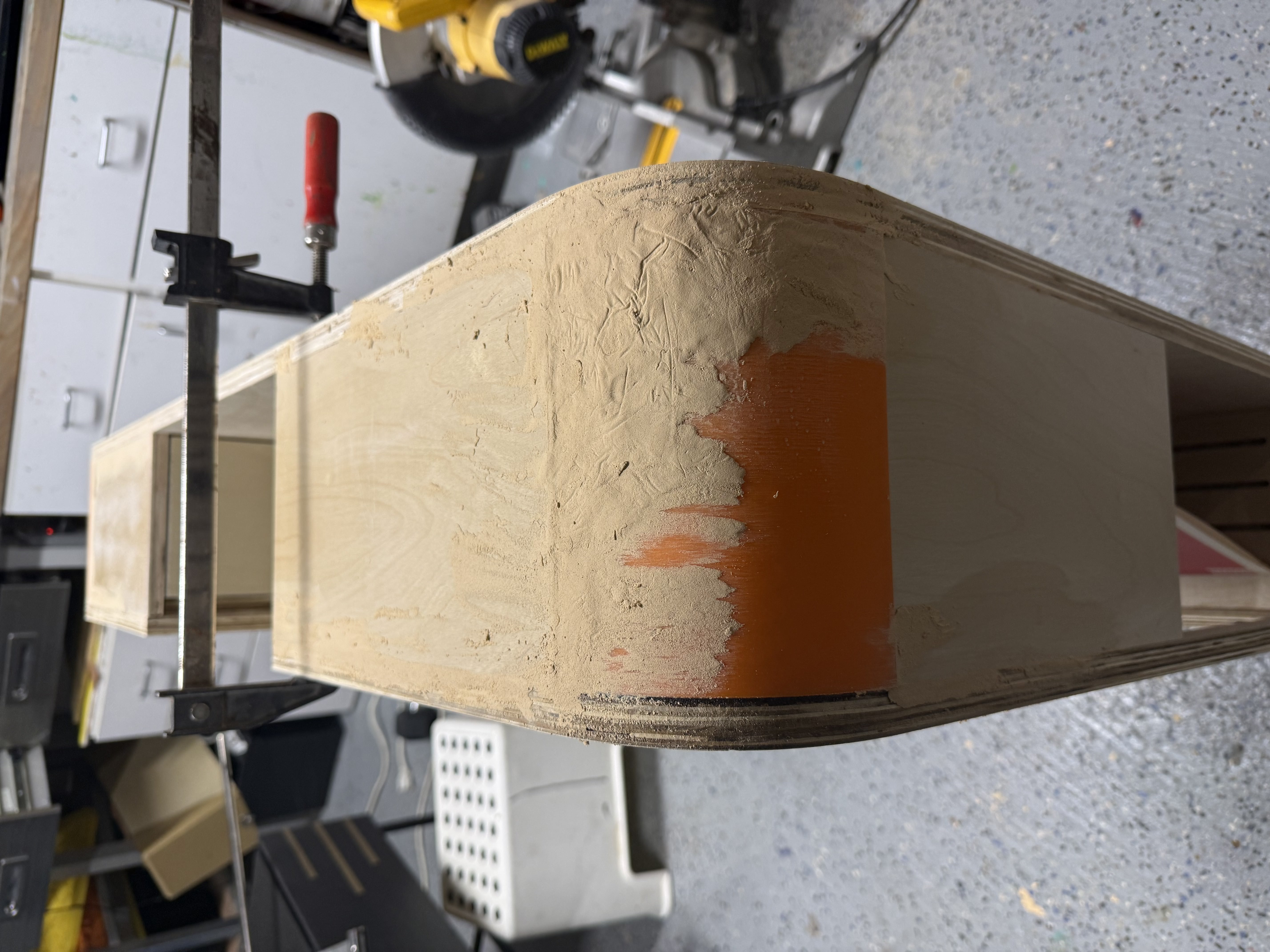
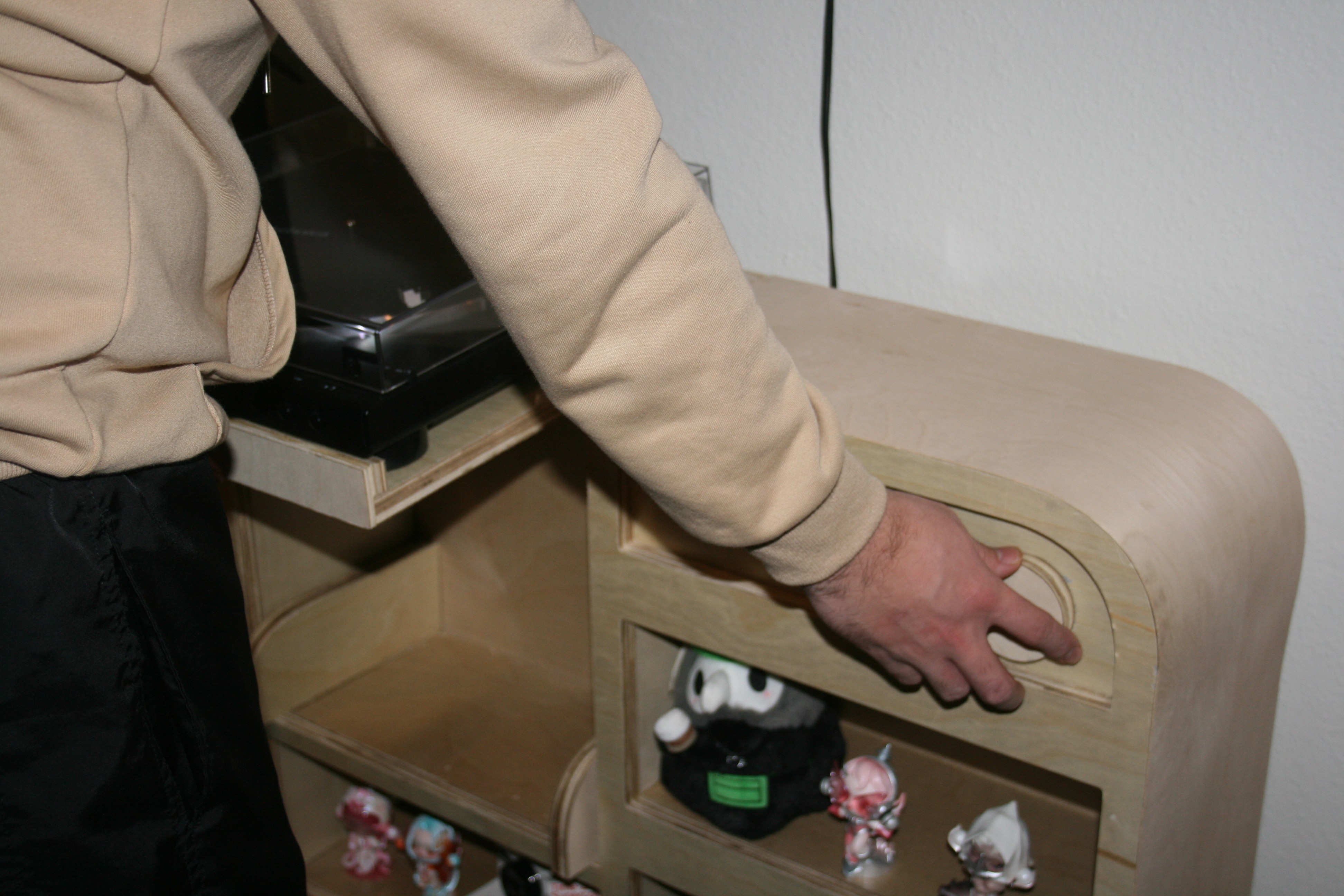
One major issue occurred when a curved wood section failed. I originally planned to use kerfing to create the bend, but it didn’t work as expected.
With no shop access and no extra wood, I had to rethink the design fast.
I returned to Rhino and:
Modeled a new curved component
Filled in missing geometry
Rebuilt the part digitally
3D printed a replacement solution
This part of the project pushed me the hardest because there was no “redo” option.
Repair & Recovery
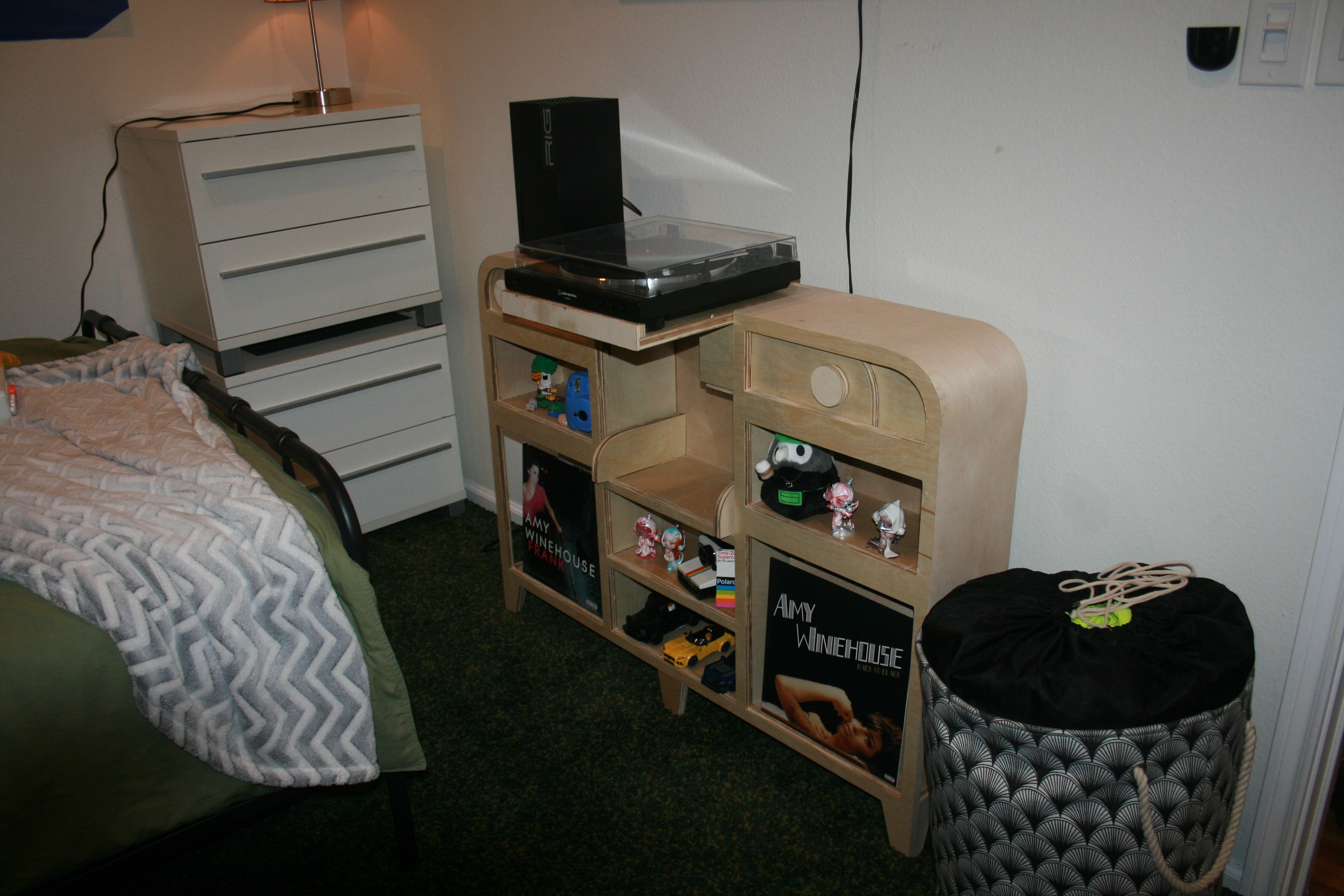
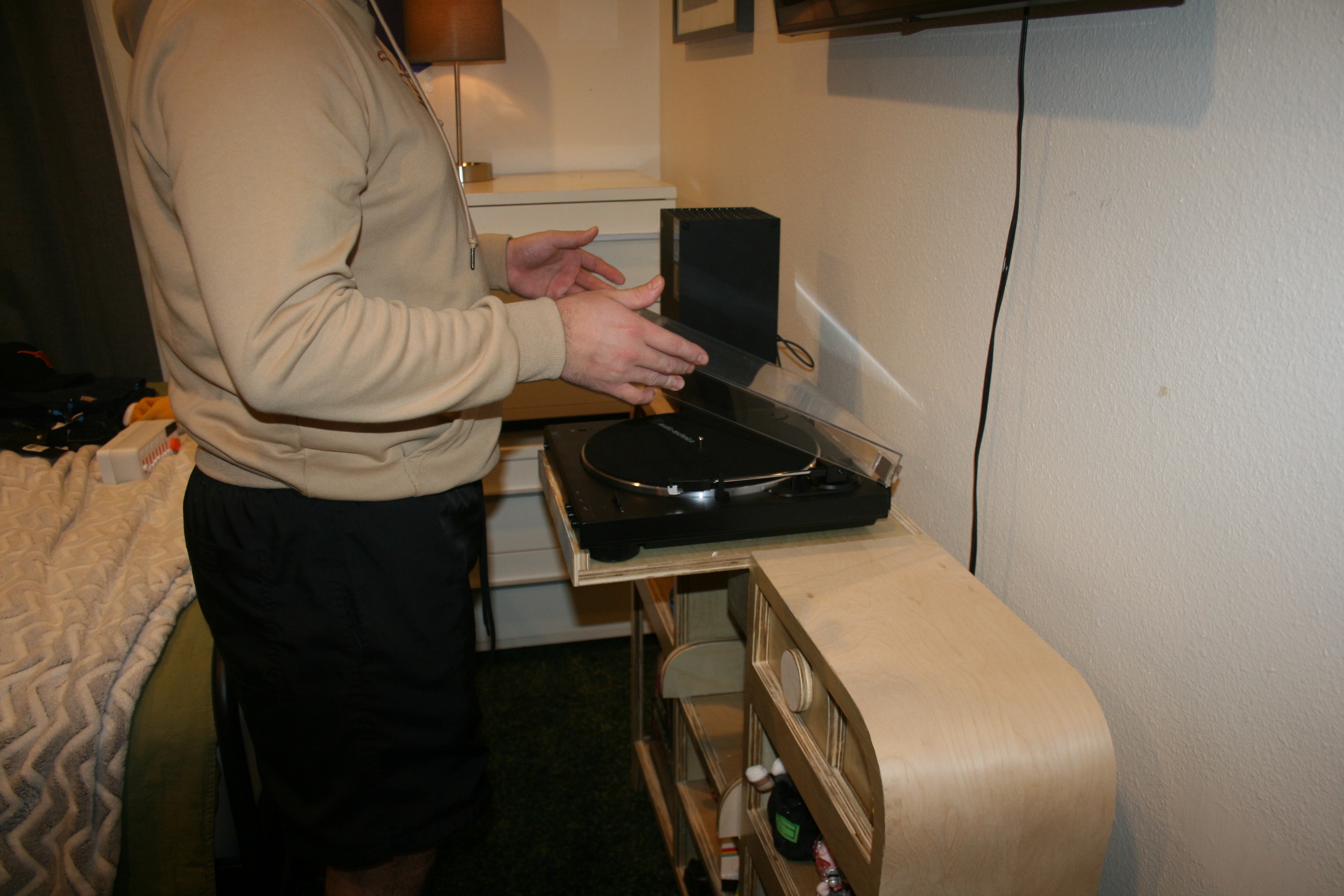
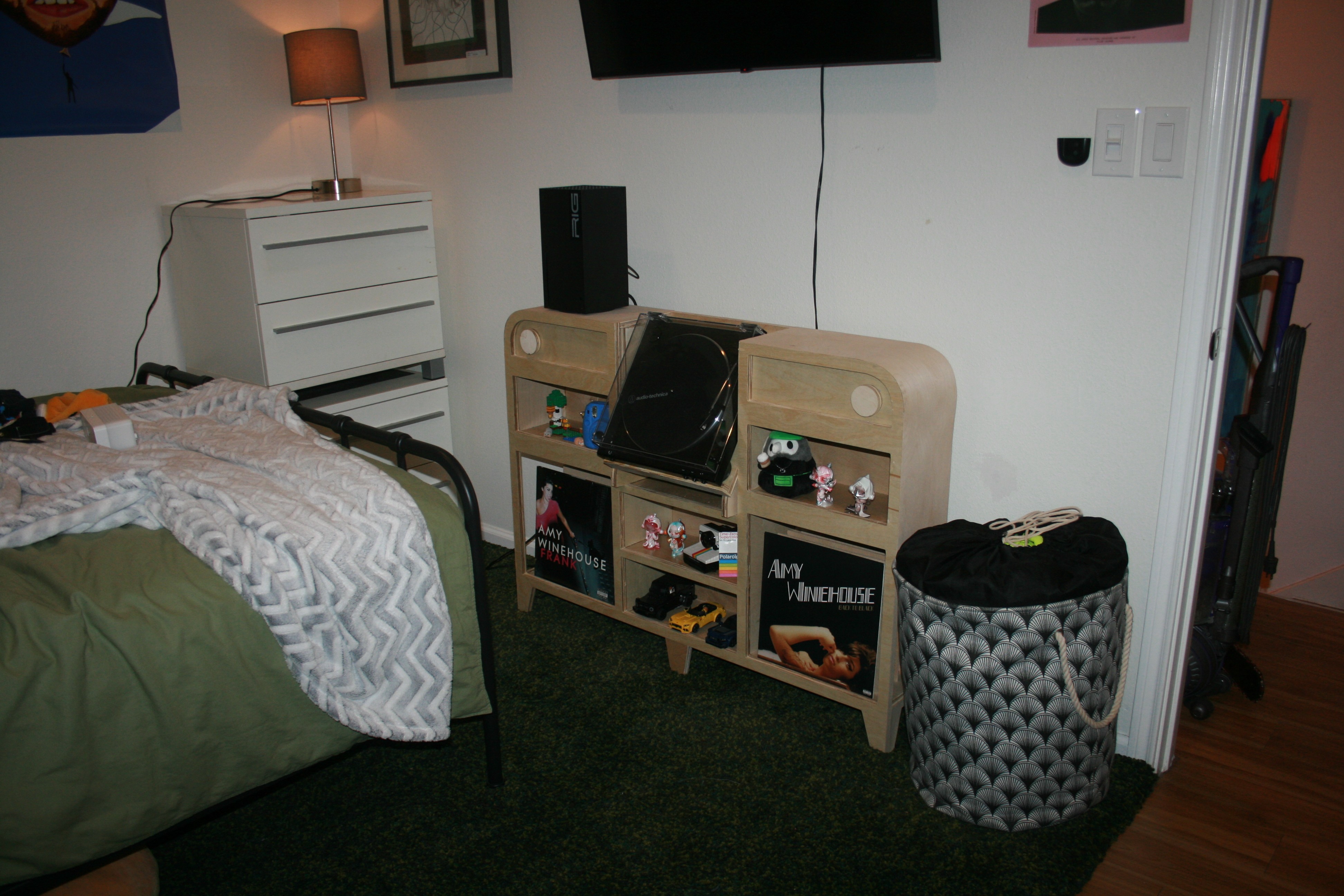
Rhino 8 • VCarve • ShopBot 3 • slicing software, ShopBot CNC • 3D printer • Hardware
Deliverables:
Tools:
Role:
Timeline:
Designer + Fabricator
1 Semester (15 weeks)
Research • Sketching/Prototyping • Rhino • Fabrication
User interview + space photos • Sketch iterations • physical prototypes (foam/3D prints) • Final Rhino model • CNC toolpaths/layout (VCarve) • Final constructed piece + final photography • Presentation
Designing Functional Furniture